On This Page
The Main Differences at a Glance
| Regular domain | Premium domain | |
|---|---|---|
| How you get it | Register an available name | Buy from an owner, or pay a registry premium |
| Upfront cost | Standard yearly fee, often $10–$20 for .com | Hundreds to thousands, sometimes far more |
| Renewal | Standard rate | Usually standard for aftermarket; often high for registry premiums |
| Typical quality | Longer or more specific names | Shorter, cleaner, more memorable names |
| Availability | Instant, if the name is free | Depends on the seller |
| Technology | Identical | Identical |
The last row is the one people forget. A premium domain doesn't load faster or work better. The entire difference is the name, and what that name does for your business.
Price: One-Time vs Yearly
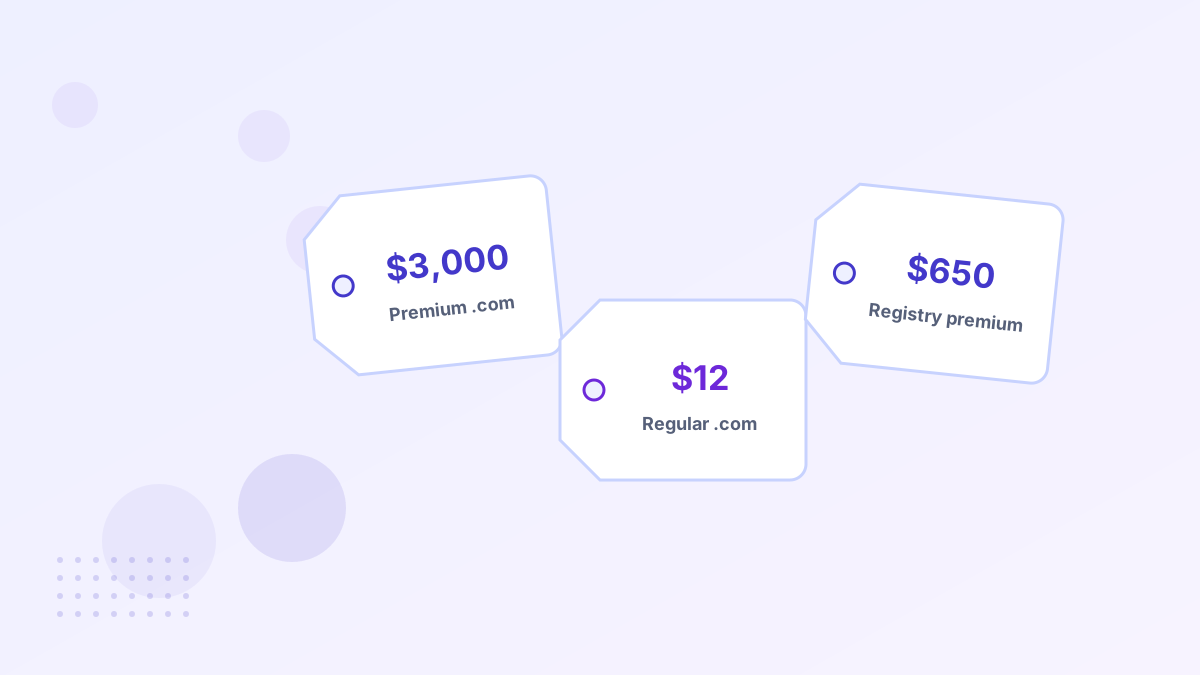
Regular domains are rented year by year at a predictable fee. Standard .com registrations at mainstream registrars usually cost around $10–$20 a year, while some newer extensions cost more.
Aftermarket premium domains add a one-time purchase price on top, then usually renew at that same standard rate. That makes a premium .com cheaper over time than it first appears. Registry premiums are the exception: their higher price can apply every year. Our renewal fees guide explains how to check.
Name Quality and Availability
Almost every short, pronounceable .com was registered long ago. So if you search for a regular domain today, you'll typically find longer names, extra words, or less common extensions available.
Premium domains are where the shorter, cleaner names live. That's what you're paying for: access to names that simply aren't available to register anymore. Marketplaces like Atom curate these by style and industry so you can find one that fits.
Typical Available Names
Longer phrases, added words like "get" or "hq", hyphens, or newer extensions.
Typical Listed Names
Short brandables, clean compounds, one-word names on modern extensions.
Brand Impact
A domain is part of how customers judge you. Short, easy names are easier to remember and recommend, and they look established. Long or awkward names can work, but they ask more of your customers and your marketing.
The gap matters most for consumer brands, apps and businesses that rely on word of mouth. For businesses that win customers through referrals or contracts, a solid regular domain often does the job.
SEO: Less Difference Than You'd Think
Search engines don't rank a domain higher because it cost more. Rankings come mainly from content, relevance and reputation. A premium name can help indirectly, through better click-through and more people searching for you by name, but it isn't a shortcut.
For more detail, see do premium domains help SEO.
Three Common Scenarios
A local plumber. Most customers arrive through search, maps and referrals, and rarely type the web address. A clear regular domain that includes the service and town works well, and the money is better spent on reviews and local marketing.
A consumer app. Users recommend it to friends, see it in app stores and type it from memory. Here a short, memorable name pays off every day, and a premium domain is often worth it.
A B2B software startup. Buyers research vendors carefully and judge credibility quickly. A clean brandable .com helps in sales conversations and investor decks, so a mid-range premium name is usually a sensible investment.
The pattern: the more your growth depends on people remembering and trusting your name, the more a premium domain earns its price.
Which Do You Need?
Choose Premium If
- You're building a long-term brand
- Customers will type or recommend your name
- Your best available regular name is clearly weaker
- A payment plan makes it affordable
Choose Regular If
- You're testing an idea or on a tight budget
- Most customers find you through referrals
- You've found a clear, short available name
- You'd rather spend on product first
Many businesses start with a regular domain and upgrade later. That works, but changing domains has costs. Our guide on upgrading to a premium domain explains how to plan it.
Premium vs Regular FAQs
Is a premium domain technically better?
No. Premium and regular domains work exactly the same way. The difference is the name's value.
Can a regular domain become premium?
Its market value can rise if demand for the words grows, and registries can designate names as premium. But you'll keep paying standard renewal unless the registry changes its pricing.
Is a premium .com more expensive to renew?
An aftermarket .com usually renews at the standard .com rate. Always check the renewal price for registry premiums.