On This Page
- Why Startups Buy Premium Domains
- When It's Worth It
- When to Wait
- What Startups Typically Spend
- Payment Plans Change the Math
- Choosing the Right Name
- .com vs .io vs .ai for Startups
- Buying Early vs Upgrading Later
- Due Diligence Checklist
- After You Buy
- What to Look for in a Startup Name
- A Worked Example
- Startup Domain FAQs
Why Startups Buy Premium Domains
Most short, memorable .com names were registered years ago. When founders search for a name they like, the .com is usually taken. They can settle for a longer variation, use another extension, or buy a premium domain: a name that's already registered and offered for sale.
A premium name gives a startup a clean, memorable address from day one. That helps with word of mouth, press, investor emails, hiring and customer trust, all of which matter more when nobody knows your brand yet.
When It's Worth It
You're Building a Brand
If you plan to grow for years, the domain will appear on everything you do.
You Rely on Word of Mouth
Referrals, podcasts and events all depend on a name people can type after hearing it.
You're Raising Money
A clean .com quietly signals that you take the brand seriously.
A Rival Owns the Variation
If a competitor holds the .com of your preferred name, it's time to pick a name you can own.
When to Wait
- You're still testing the idea and may pivot soon.
- The name isn't final and your team is still debating.
- Cash is critical for runway, and a cheaper name would let you launch.
Even then, it's worth checking prices early. Some founders buy a name on a payment plan precisely so they don't have to choose between the right name and their runway.
What Startups Typically Spend
| Tier | Typical range | What you get |
|---|---|---|
| Entry brandable | Around $1,000 to $3,000 | Invented or compound names, often longer |
| Strong brandable | Around $3,000 to $10,000 | Short, easy-to-say names with broad appeal |
| Top tier | $10,000 to $50,000+ | Very short names and real words |
| Ultra premium | Six figures and up | One-word .coms and category names |
Atom says premium domains on its marketplace average $500 to $50,000, with ultra-premium names much higher. Renewals after purchase are usually at standard registrar rates. See Atom pricing.
Payment Plans Change the Math
Many premium listings offer lease-to-own payment plans, commonly over 6 to 24 months and sometimes longer. You pay an installment, start using the domain right away and own it once the final payment is made. Longer plans may carry a surcharge or require a down payment, and the listing shows the real monthly figure.
For a startup, that turns a $6,000 name into a few hundred dollars a month, which is often easier to fit into a launch budget than a single payment. See Atom payment plans and lease-to-own domains.
Choosing the Right Name
- Write a short briefAudience, tone and words to avoid.
- Browse by style and industryMarketplaces let you filter by length, style and category.
- Shortlist 10 to 15 namesRun the radio test on each.
- Check trademarks and handlesFor your top five.
- Test with real peopleThen decide.
Our guide to naming a startup covers each step in detail.
.com vs .io vs .ai for Startups
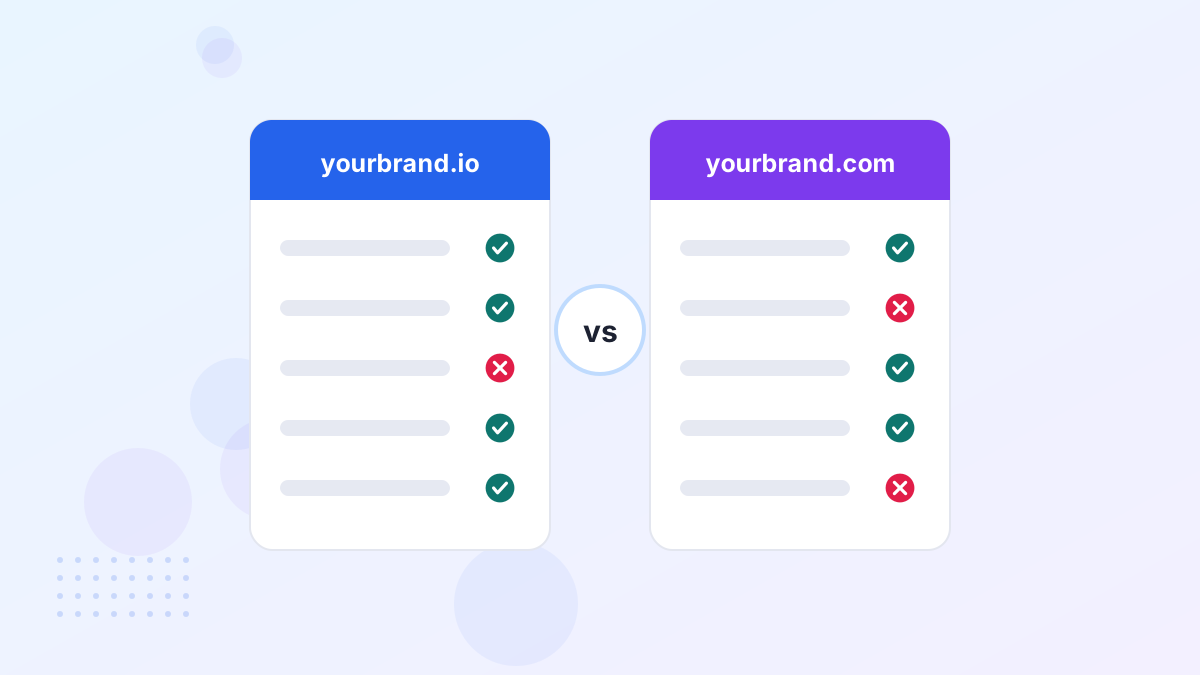
Tech startups often use .io or .ai because short names are easier to find. That works well for developer and AI audiences. But as you grow into broader markets, more people type .com by default, and if someone else owns it, you'll leak visitors and email.
A common approach is to launch on the .com if it's affordable, or launch on .io or .ai and buy the .com as soon as you can. See .com vs other extensions.
Buying Early vs Upgrading Later
Upgrading later is possible, but it usually costs more. Once your startup is known, the owner of your .com can see the demand and price accordingly. You'll also pay for redirects, rebranding and a period of mixed recognition. If you're confident in your name, buying the .com early is often the cheaper path. See rebranding to a premium domain.
Due Diligence Checklist
- Trademark search in your main markets. See trademark checks.
- Domain history for spam or past brands. See history checks.
- Renewal price after purchase.
- Transfer process and timing.
- Buyer protection from the marketplace.
After You Buy
Secure the domain with two-factor login and auto-renew, set up email with proper authentication, grab social handles and consider a few defensive variations. Our after-purchase checklist walks through everything.
What to Look for in a Startup Name
- Two or three syllables that are easy to say on a call or a stage.
- Obvious spelling, so people can type it after hearing it once.
- No narrow product reference, so the name survives a pivot.
- A clear tone that fits your audience, whether playful, technical or premium.
- A clean history with no spam or conflicting brand behind it.
Marketplaces make this easier because you can filter by length, style and industry, and every name you see already comes with its .com.
A Worked Example
Imagine two founders launching a scheduling tool for gyms. Their working name has a hyphenated .com, and the plain .com belongs to an unrelated company. They browse a curated marketplace, shortlist six brandable names between $2,000 and $6,000, run quick trademark searches and test the top three with ten gym owners. The winner costs $4,200 on a 12-month plan, about $350 a month, and they launch with matching handles the same week.
Compared with their monthly ad budget, the domain is a modest cost. Compared with renaming after a year of marketing, it's very cheap.
Startup Domain FAQs
Is a premium domain worth it for an early-stage startup?
Often, if you're confident in the name and building a long-term brand. Payment plans make it more accessible.
Do investors care about the domain?
It's rarely a deciding factor, but a clean .com is a visible sign of a well-considered brand.
Can you use a domain before it's fully paid?
On many lease-to-own plans, yes. You can point the domain to your site after the first payment.