On This Page
How Lease-to-Own Works
Lease-to-own, often shortened to LTO, is a payment plan for a domain. You agree on a total price and a term, pay the first installment, and start using the domain straight away. When the final payment clears, ownership transfers to you.
During the plan, the seller or the marketplace keeps legal control of the domain, usually holding it in an escrow or marketplace account. You get working control, typically the ability to point DNS at your website and email, but you can't transfer or sell it until you've paid in full.
- Choose a name with LTOMany marketplace listings show a monthly option next to the buy-now price.
- Pick a term and pay the first installmentSome plans also require a down payment.
- Use the domainSet up DNS for your site and email while you pay.
- Pay monthlyAutomate payments so nothing is missed.
- Take ownershipAfter the last payment, the domain transfers to you.
Lease-to-Own vs Renting a Domain
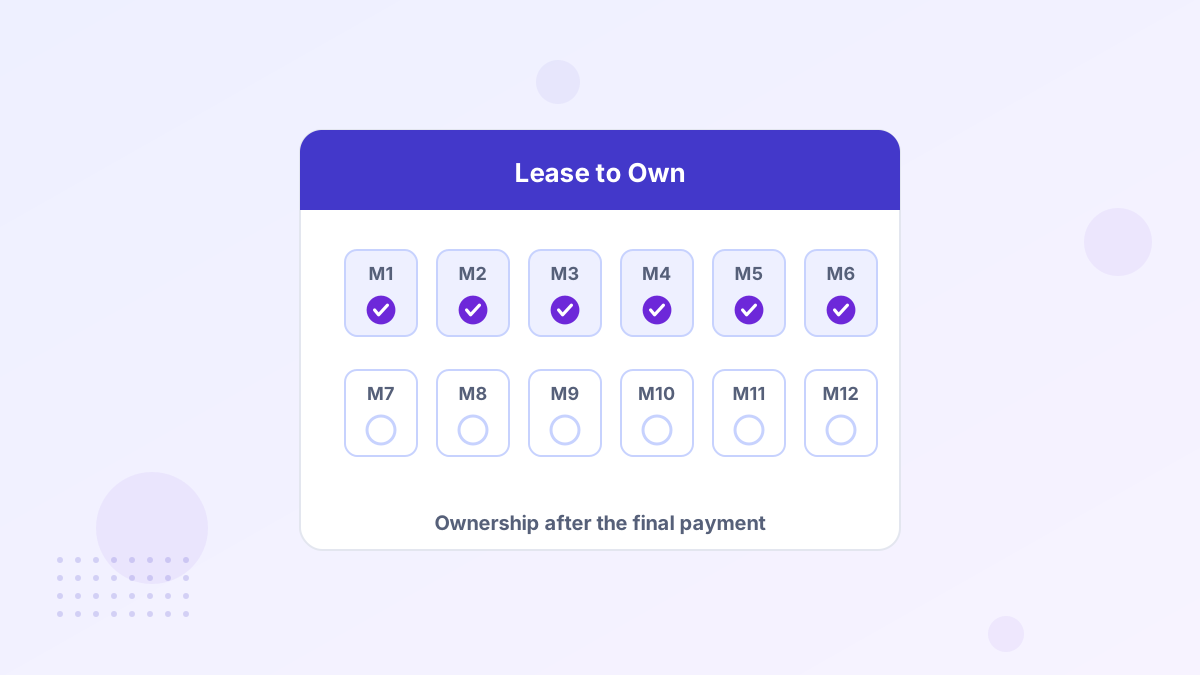
Lease-to-own and rental sound similar but are very different. With lease-to-own, every payment counts toward buying the domain, and you own it at the end. With rental, you pay to use the domain for a period, and it stays with the owner however long you pay.
Rental can make sense for short campaigns. For a business name you'll build on, lease-to-own is almost always the right structure, because you end up owning the asset you've invested in.
Typical Terms Across Marketplaces
| Marketplace | Typical length | Added cost |
|---|---|---|
| Atom | Usually 6–24 months, some up to 36 | Shown on the listing; longer terms can carry a surcharge |
| GoDaddy / Afternic | Up to the seller's maximum, up to 60 months | No fee to 12 months; 10% for 13–24; 20% for 25–36; 30% for 37–60 |
| BrandBucket | Monthly price shown per listing | Built into the monthly figure |
| Escrow.com holding | Three months to five years | Holding fee based on value and length, plus escrow fee |
The pattern is consistent: longer plans cost more in total. GoDaddy's published fee schedule makes that explicit, and it's a useful benchmark for judging other plans.
What It Really Costs
Here's a simple illustration using GoDaddy's published service fees on a $6,000 name. The real figures depend on the listing.
| Term | Service fee | Approximate total | Approximate monthly |
|---|---|---|---|
| 12 months | None | $6,000 | $500 |
| 24 months | 10% | $6,600 | $275 |
| 36 months | 20% | $7,200 | $200 |
The lesson: pick the shortest term your cash flow comfortably supports. A slightly higher monthly payment can save hundreds or thousands overall.
Risks for Buyers
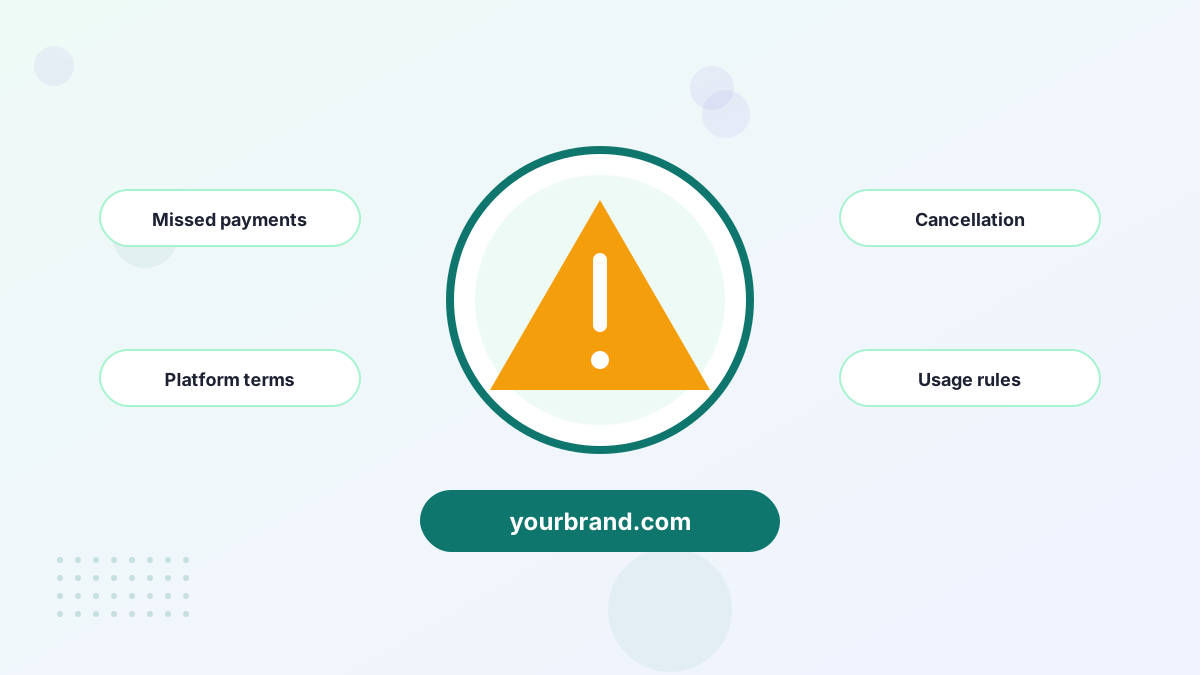
- Default means loss. If you stop paying, you typically lose the domain and everything you've paid.
- Limited control. You can't transfer, sell or move the domain to your own registrar until it's paid off.
- Usage rules. Plans prohibit illegal or abusive use, and some forbid listing the domain for sale during the plan.
- It isn't a loan. Lease-to-own is a transaction arrangement, not a regulated credit product, so consumer credit protections may not apply.
- Platform dependence. You're relying on the marketplace to manage payments and the final transfer.
None of these are reasons to avoid lease-to-own. They're reasons to choose a reputable marketplace, read the terms and set up automatic payments.
Benefits for Buyers
- Launch now on the name you want, rather than settling for a weaker one.
- Protect your cash for product, people and marketing.
- Take the name off the market so a competitor can't buy it.
- Pay off early on many plans, sometimes with a discount from the seller.
Is Lease-to-Own Right for You?
A Good Fit If
- The name is clearly better than anything you can afford outright
- You have steady income or funding to cover monthly payments
- You plan to use the name for years
- The plan's added cost is modest for your chosen term
Think Twice If
- Your income is uncertain over the plan length
- You might pivot away from the name soon
- You need full control and your own registrar immediately
- A long term would add a large surcharge
For most early-stage businesses with a clear long-term plan, a short-to-medium lease-to-own on a strong name is one of the smartest ways to get a premium domain without draining cash.
Questions to Ask Before You Sign
- What's the total cost, including any down payment and surcharge?
- Can you choose a shorter term than the maximum?
- What exactly can you control during the plan: DNS, email, nameservers?
- What happens if a payment fails, and is there a grace period?
- Can you pay off early, and is there a discount?
- Who pays renewals while the plan runs?
Lease-to-Own in Private Deals
If you've negotiated directly with an owner, you can still use a payment plan safely. Escrow.com offers a domain holding service where the domain sits in escrow while you pay on schedule, from three months up to five years. The seller transfers the domain to Escrow.com after your first payment, and it's released to you at the end.
Avoid informal arrangements where the seller keeps the domain in their own account with nothing in writing. Our purchase agreement guide covers what to put on paper.
Tips for a Smooth Lease-to-Own
- Do your checks firstTrademarks and history should be clear before your first payment.
- Read the cancellation termsKnow exactly what happens if you stop.
- Automate paymentsUse a card or account that won't expire mid-plan.
- Keep recordsSave the agreement and receipts.
- Take delivery promptlyAfter the final payment, move the domain into your account and turn on auto-renew.
Lease-to-Own FAQs
Can you use a lease-to-own domain right away?
Yes. Most plans let you point the domain at your website and email after the first payment.
Is there interest on domain lease-to-own?
It isn't usually called interest, but longer plans often add a service fee or surcharge. Compare the total with the one-time price.
Can you pay off a lease-to-own early?
Often yes, and some sellers offer a discount for early payoff. Check the plan terms.
What happens if you miss a payment?
Terms vary, but missed payments can end the plan, return the domain to the seller and forfeit what you've paid.