On This Page
What Domain Escrow Is
Domain escrow is a service where a neutral third party holds the buyer's payment until the seller has transferred the domain. Only when the buyer confirms receipt, or an inspection period ends, does the escrow company release the money to the seller.
It removes the trust problem from deals between strangers. The buyer knows the seller can't take the money and disappear, and the seller knows the buyer has genuinely paid before they hand over the domain.
How Escrow Works Step by Step
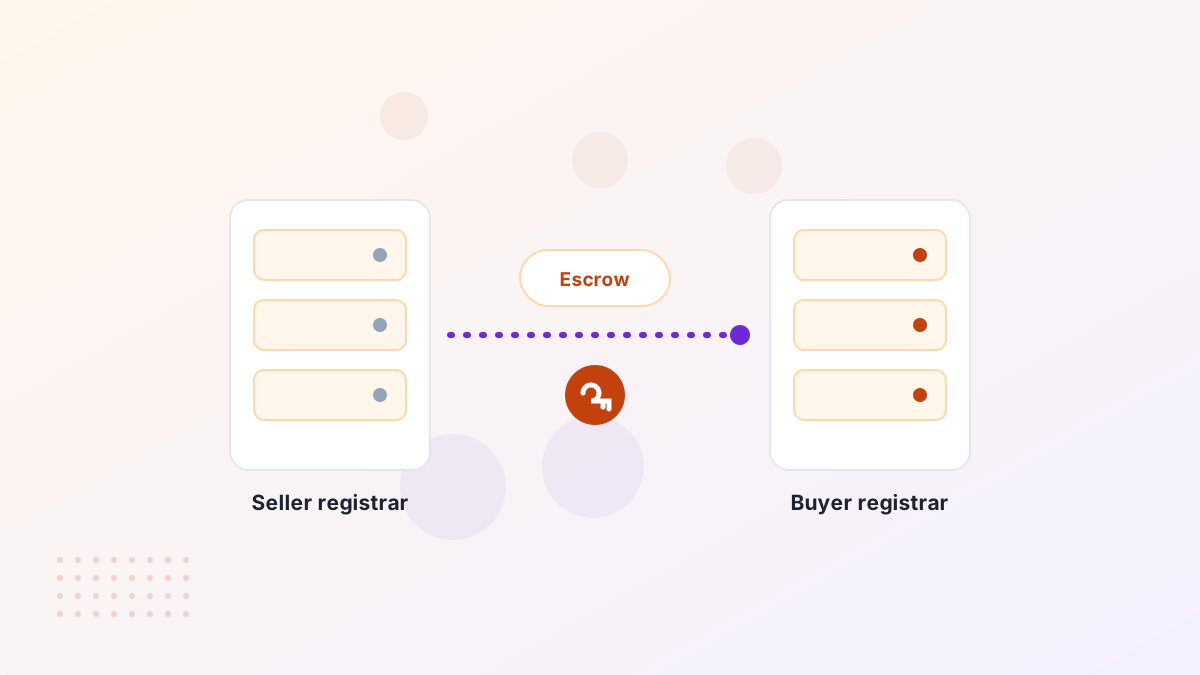
- Agree on termsBuyer and seller agree the domain, price, who pays fees and the inspection period.
- Buyer pays the escrow serviceThe escrow company verifies and secures the funds.
- Seller transfers the domainBy push to the buyer's account or by providing an auth code.
- Buyer confirms receiptThe buyer checks they control the domain and accepts it.
- Escrow pays the sellerFunds are released once the transfer is verified or the inspection period ends.
Some escrow services offer a concierge option, where the escrow company receives the domain into its own registrar account first, then passes it to the buyer. That adds a fee but removes almost all room for mistakes.
Marketplace Checkout vs Escrow Service
If you buy on a marketplace, you usually don't need a separate escrow service. Marketplaces build the same protection into checkout by holding your payment until the transfer completes. Atom, for example, holds payment until the transfer is done and refunds you in full under its Purchase Protection if the domain can't be transferred.
| Situation | Best option |
|---|---|
| Buying a listed name on a marketplace | The marketplace's own checkout |
| Private deal with an owner you contacted | A recognized escrow service |
| Brokered deal | Usually escrow, often arranged by the broker |
| Private payment plan | Escrow with a domain holding service |
What Escrow Costs
Escrow services usually charge a percentage of the price, on a sliding scale: smaller transactions pay a higher percentage, and larger ones a lower percentage. Payment method can add to the cost, with cards and some online payment methods costing more than wire transfers.
Who pays is negotiable. A common convention is that the buyer covers escrow fees when the buyer asks to use escrow, but splitting them is also normal. Agree this in writing before you start. Sedo's standalone escrow for deals made outside its marketplace, for example, charges a percentage fee with a minimum, which either party can pay.
How Long Escrow Takes
A straightforward escrow transaction often completes within a few days: a day or so for payment verification, then the transfer, then the inspection period. Wire transfers, international payments and registrar delays can stretch that to a week or more.
Transfers between registrars can take up to several days for .com, while a push between accounts at the same registrar is usually instant. If the domain was recently registered or transferred, a 60-day transfer lock may apply. See transfer locks.
Domain Holding for Payment Plans
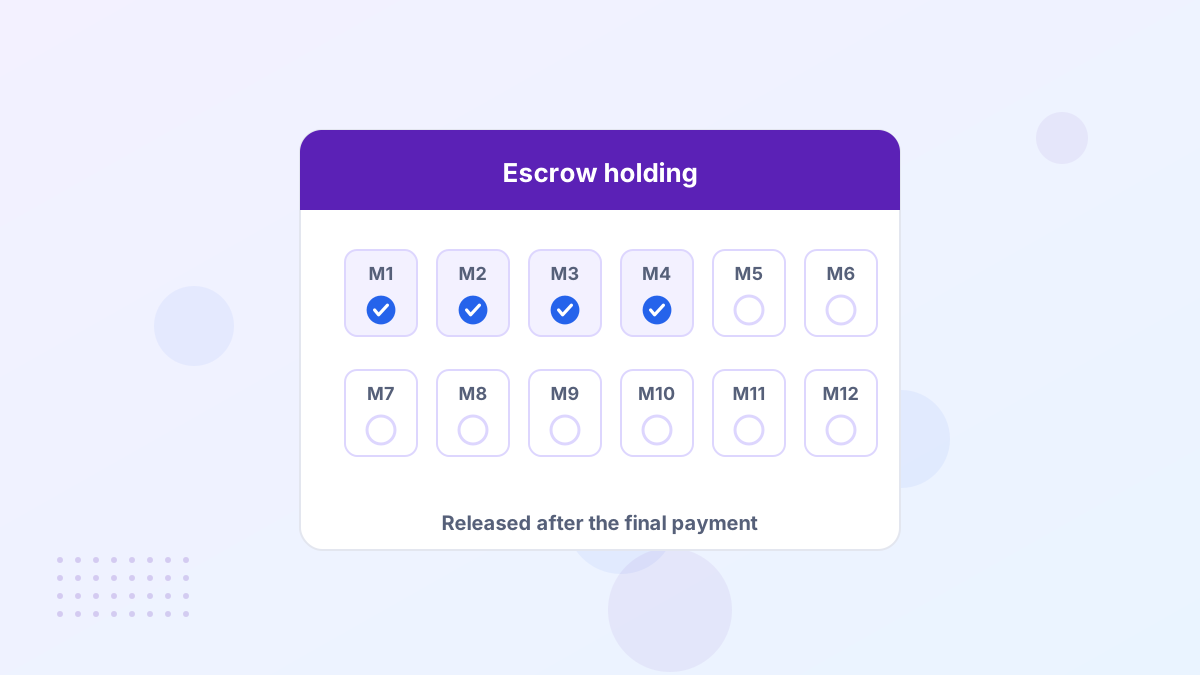
Escrow can also support payment plans in private deals. With Escrow.com's domain holding service, the seller transfers the domain into escrow after the first payment. You make scheduled payments, and the domain is released to you once you've paid in full. Terms run from three months to five years.
This gives you the flexibility of lease-to-own without trusting the seller to keep the domain safe. See our lease-to-own guide for the wider picture.
How to Avoid Fake Escrow Scams
A common scam is a fake escrow website set up by the "seller" or "buyer" to steal payments. Protect yourself with a few simple rules.
- Choose the escrow service yourself. Never use a site the other party sends you without checking it.
- Type the address directly rather than clicking emailed links.
- Be wary of unknown services with no history, reviews or regulatory information.
- Watch for pressure to pay quickly or outside the escrow process.
Our guide to domain buying scams covers more warning signs.
Inspection Periods Explained
Most escrow transactions include an inspection period, a short window after the transfer when the buyer can check everything is as agreed. For a domain, that usually means confirming the domain is in your account, unlocked for your use and controllable through DNS.
Don't rush to accept before you've checked, but don't let the window lapse either. If you do nothing, many escrow services release funds automatically at the end of the period. If something's wrong, raise it inside the window so the escrow company can step in.
What Escrow Doesn't Protect You From
Escrow guarantees the exchange of money for the domain. It doesn't check whether the name infringes a trademark, whether it has a spammy past, or whether the price was fair. Those checks are still yours to do before you agree terms.
See our guides to trademark checks, domain history and valuation before you open a transaction.
Escrow Checklist for Buyers
- Verify the seller controls the domainAsk them to make a DNS change you choose.
- Agree terms in writingPrice, fees, inspection period and delivery method.
- Use a reputable escrow serviceSelected by you, at an address you typed.
- Have your registrar account readySo the transfer isn't delayed.
- Confirm control before releasing fundsCheck you can edit DNS and the domain shows in your account.
Domain Escrow FAQs
Do you need escrow when buying on a marketplace?
Usually not. Reputable marketplaces hold your payment until the transfer completes, which provides the same protection.
Who pays escrow fees?
It's negotiable. Buyers often pay when they request escrow, and splitting fees is common. Agree before starting.
Can escrow handle payment plans?
Yes. Domain holding services keep the domain in escrow while you pay on schedule, then release it to you.