On This Page
The Golden Rule
Never pay someone directly for a domain unless you're already sure you're dealing with the real owner and a safe process. Pay through a reputable marketplace's checkout or a recognized escrow service that you chose yourself. That single habit defeats most domain scams.
Urgency, an unfamiliar escrow site, a request to pay by wire or crypto outside a platform, or a seller who won't prove control of the domain. Any one of these is a reason to stop.
Fake Escrow Websites
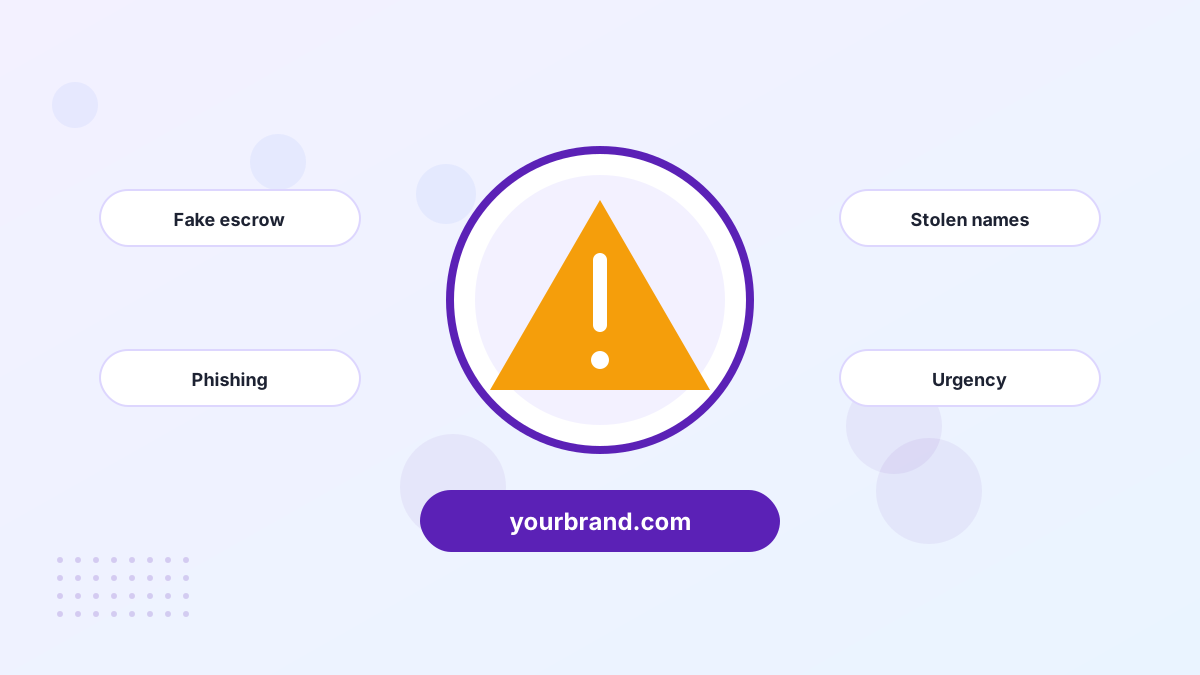
The most damaging domain scam is the fake escrow site. The scammer suggests an "escrow service" that looks professional but is controlled by them, often with a name that resembles a real one. You pay, see a convincing dashboard, and the money disappears along with the site.
- Choose the escrow service yourself. Never use one the other party insists on.
- Type the address manually rather than clicking links in emails.
- Check spelling closely. Lookalike domains swap letters or add words.
- Be suspicious of a refusal to use a well-known escrow service.
Stolen Domains
Sometimes the "seller" doesn't own the domain at all. Hijacked domains are sold quickly, often at an attractive price and without escrow. When the real owner recovers the name, the buyer loses both the domain and the money.
- Ask why if ownership details changed very recently.
- Be wary of a premium name priced far below its value with pressure to close fast.
- Ask the seller to prove control by making a DNS change you specify.
Sellers Who Never Deliver
A simpler version: the seller takes payment and never releases the auth code, or sends one that doesn't work. Escrow prevents this entirely, because the seller isn't paid until the transfer completes. Marketplace protection works the same way. Atom, for example, refunds you in full if a domain can't be transferred.
Phishing and Impersonation
Scammers impersonate registrars, marketplaces and brokers to steal logins or payments.
| Scam | What it looks like | What to do |
|---|---|---|
| Fake renewal notice | Urgent email about expiry with a payment link | Log in to your registrar directly to check |
| Fake marketplace invoice | An invoice for a domain you're "buying" | Only pay inside the marketplace's checkout |
| Changed payment details | A mid-deal email with new bank details | Confirm by another channel before paying |
| Fake broker | Someone claiming to represent a seller | Verify the broker independently |
Appraisal and Valuation Scams
This one usually targets owners, but buyers see versions of it too. Someone insists you use a specific paid appraisal service before a deal can proceed. The "appraisal" costs money, and the buyer or seller vanishes. Legitimate parties don't require you to pay a particular appraiser. See our honest guide to appraisal tools.
Pressure and Urgency Tactics
Almost every scam includes urgency: another buyer is waiting, the price expires tonight, the domain is about to be sold. Urgency exists to stop you checking details.
A real seller of a real domain will wait a day while you verify ownership and set up escrow. If they won't, walk away.
Fake Listings and Impostor Sellers
Some scammers list domains they don't own on classified sites, social media or forums, or reply to "wanted" posts claiming to own the name you're after. Others contact you after you've shown interest in a domain, pretending to be its owner.
- Check the domain itself. Legitimate owners often show a for-sale page on the domain that points to their marketplace listing.
- Contact the owner through the listing or the domain's own sale page, not through someone who contacted you first.
- Be wary of off-platform offers for a name that's listed on a marketplace. Moving the deal off-platform removes your protection.
Payment Methods to Avoid
How you pay matters as much as who you pay. Wire transfers, gift cards, cryptocurrency and "friends and family" payments are hard or impossible to reverse, which is why scammers prefer them. If a seller insists on one of these and refuses escrow or marketplace checkout, treat it as a serious warning sign.
Card payments and established escrow services give you more ways to resolve problems. Marketplace checkouts add their own protection on top.
A Safe Buying Checklist
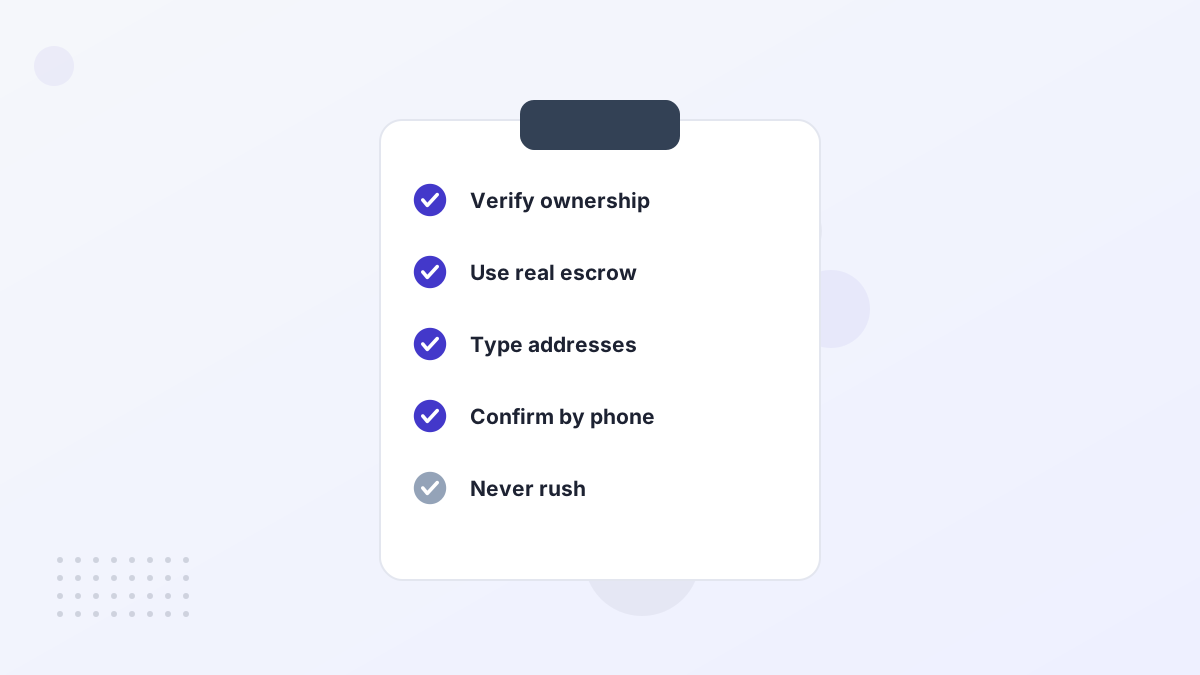
- Buy through a marketplace when possibleBuilt-in protection removes most risks.
- For private deals, use escrow you choseAt an address you typed.
- Verify control of the domainAsk for a DNS change you specify.
- Check recent ownership changesAnd ask about any you see.
- Confirm payment details by a second channelEspecially if they change mid-deal.
- Keep everything in writingTerms, offers and agreements.
- Take your timeReal deals survive a day of checking.
If You Think You've Been Scammed
- Contact your bank or payment provider immediately to try to stop or reverse the payment.
- Report it to the platform involved and to your local fraud authorities.
- Contact the registrar of the domain if you believe it was stolen.
- Keep all records: emails, receipts and screenshots.
Domain Scam FAQs
Is it safe to buy a domain from a private seller?
It can be, if you verify they control the domain and use a reputable escrow service you selected.
How can you tell if an escrow site is fake?
Be wary of sites suggested by the other party, lookalike spellings and services with no verifiable history. Choose and type the address yourself.
Are marketplace purchases safer?
Generally yes. Reputable marketplaces hold your payment until the transfer completes and verify listed domains.