On This Page
What a Backorder Is
A backorder is a request to register a domain as soon as it becomes available after expiring. Specialist services, sometimes called drop-catchers, run automated systems that try to register the name in the fraction of a second after the registry releases it.
You usually pay a modest fee, often only charged if the catch succeeds. If several people backorder the same name with the same service, it typically goes to a private auction among them.
The Domain Expiry Timeline
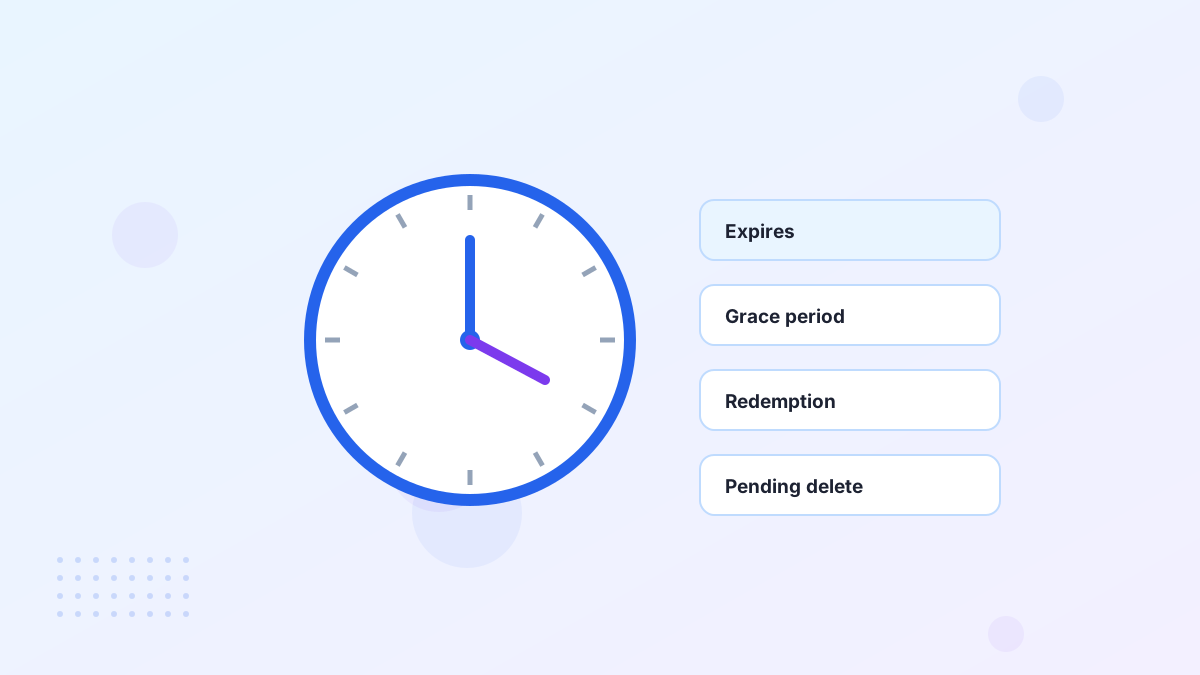
A .com domain doesn't vanish the day it expires. It goes through several stages, which together usually take around 75 to 80 days.
| Stage | Typical length | What happens |
|---|---|---|
| Auto-renew grace period | Up to about 45 days, varies by registrar | The owner can still renew at a normal price |
| Redemption period | About 30 days | The owner can restore it, but with a higher recovery fee |
| Pending delete | About 5 days | Locked; nobody can renew or restore it |
| Drop | A moment | The name is released and catchers race to register it |
Country-code domains follow their own registry rules, so timelines differ. Some skip stages entirely.
Why Many Names Never Drop
This is the part backorder marketing tends to skip. Plenty of expiring domains never reach the drop.
- The owner renews late during the grace period.
- The owner restores it during redemption.
- The registrar auctions it first. Some registrars sell expiring names in their own auctions weeks after expiry, before they could ever drop.
Valuable names are the most likely to be renewed or auctioned. So treat a backorder as a cheap side bet on a name you'd like, not as your plan for a name you need.
How Drop-Catching Works
When a domain drops, every major catching service sends registration requests at the same instant. Whoever's request the registry processes first gets the name. Services invest heavily in infrastructure and registrar connections to improve their odds, which is why different services succeed on different names.
Because no single service wins every drop, some buyers place backorders with more than one. That raises your odds on a contested name, but it can also mean paying more than one fee or ending up in an auction.
What a Backorder Costs
Costs vary by service and by how contested the name is. Typical elements include:
- The backorder fee: commonly somewhere around $10 to $80 per service, often charged only if the catch succeeds or credited toward an auction.
- Auction bids: if others backordered the same name, the final price is set by bidding.
- Registration: the first year of registration is usually included or added.
For an uncontested name, a backorder can be one of the cheapest ways to get a registered domain. For a popular one, the auction can push the price well beyond the fee.
How to Backorder a Domain
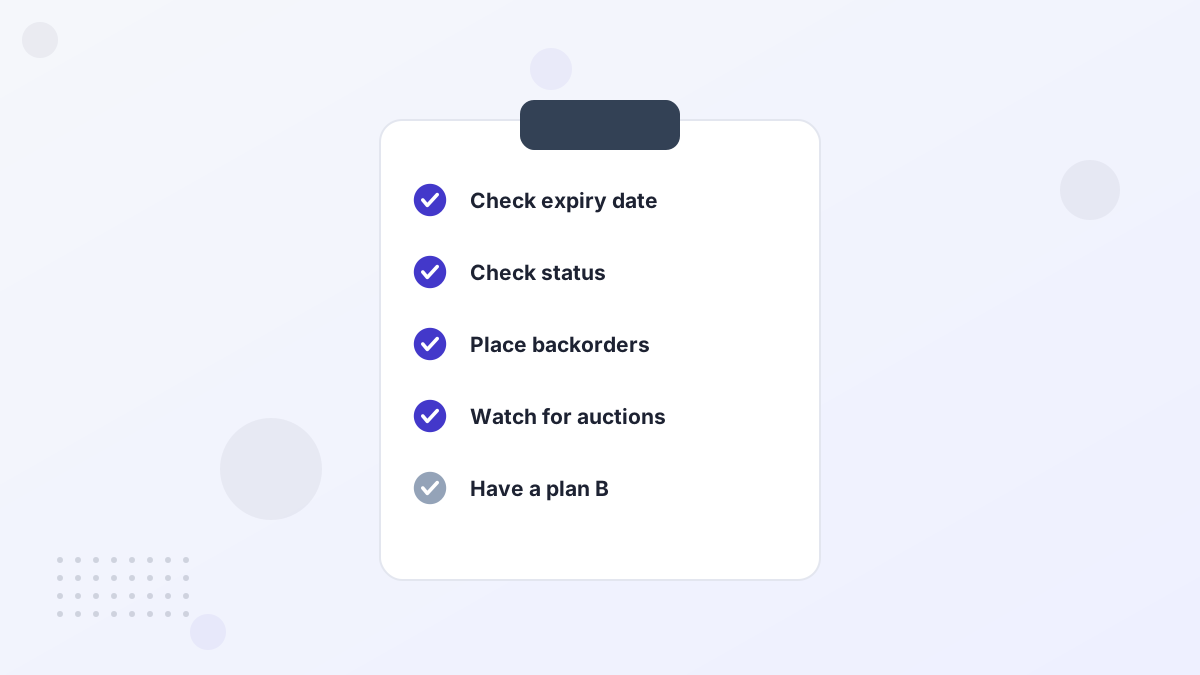
- Check the expiry dateA WHOIS lookup shows when the domain expires and its current status.
- Check where it's registeredThe registrar affects whether it may be auctioned before it drops.
- Place one or more backordersChoose services with good catch rates for that extension.
- Watch for expiry auctionsIf the registrar auctions it, you may need to bid there instead.
- Keep alternatives readyMost valuable names don't drop, so have a plan B.
Checks Before Catching a Name
Expired domains have a past. Before you commit, check what the domain hosted before, whether it has spammy links pointing at it, and whether the name conflicts with a trademark. Our guides to checking domain history and trademark checks walk through both.
Also be cautious about backordering names that match someone else's brand. Registering a name that targets an existing trademark can lead to a dispute you'd likely lose. See domain disputes.
Improving Your Odds
- Backorder early. Some services prioritize earlier orders or need time to set up.
- Use services strong in that extension. Catch rates vary by registry and service.
- Consider more than one service for a name that matters, accepting the possibility of an auction.
- Watch the registrar's auctions in the weeks after expiry, in case the name is sold there first.
- Keep your bid limit in mind if the catch goes to a private auction.
If the Name Doesn't Drop
If the owner renews, you've usually lost only the time. Many services refund or cancel unused backorders, and some keep them active for the next expiry. Check your service's terms.
A renewal also tells you something: the owner still values the name. If you want it badly, a polite approach or a broker may now be the better route. See domain brokers.
Backordering Country-Code Domains
Country-code domains follow their registries' own deletion rules. Some have no redemption period, some release names at set times, and some are dominated by local catching services with direct registry connections. If you're after a .de, .uk or .fr name, choose a service with a track record in that registry.
Backorder vs Buying From the Owner
| Backorder | Buy from the owner | |
|---|---|---|
| Cost | Low unless contested | Owner's price |
| Certainty | Low | High once agreed |
| Timing | Weeks to months, if ever | Days to weeks |
| Best for | Nice-to-have names | Names you need |
A sensible approach is to do both: place a backorder in case the name drops, while also contacting the owner or a broker. See buying a taken domain.
Backorder FAQs
Do you pay if the backorder fails?
Many services only charge if they catch the domain, but terms vary. Check each service's policy before ordering.
How long until an expired .com drops?
Typically around 75 to 80 days after expiry, if it isn't renewed, restored or auctioned first.
Can you backorder a domain that isn't expiring yet?
Many services let you place backorders early. The order simply waits until the domain reaches the drop.