On This Page
- What the UDRP Is
- The Three Elements
- What Counts as Bad Faith
- Legitimate Interests
- Costs and Timelines
- Possible Outcomes
- Other Dispute Options
- How Buyers Can Avoid Disputes
- How Brand Owners Can Use the UDRP
- How a UDRP Case Unfolds
- If You Receive a Complaint
- Why Premium Domain Buyers Rarely Face Disputes
- UDRP vs Going to Court
- UDRP FAQs
This is a general overview. Disputes turn on specific facts. If you're filing or facing a complaint, speak to a lawyer experienced in domain disputes.
What the UDRP Is
The Uniform Domain-Name Dispute-Resolution Policy is a process created by ICANN for resolving disputes over generic domains like .com, .net and the new extensions. Many country-code registries have adopted it or a local variation. It's designed to deal with cybersquatting: registering domains in bad faith to profit from someone else's trademark.
It's faster and cheaper than going to court, and decisions are made by independent panelists through providers such as WIPO.
The Three Elements
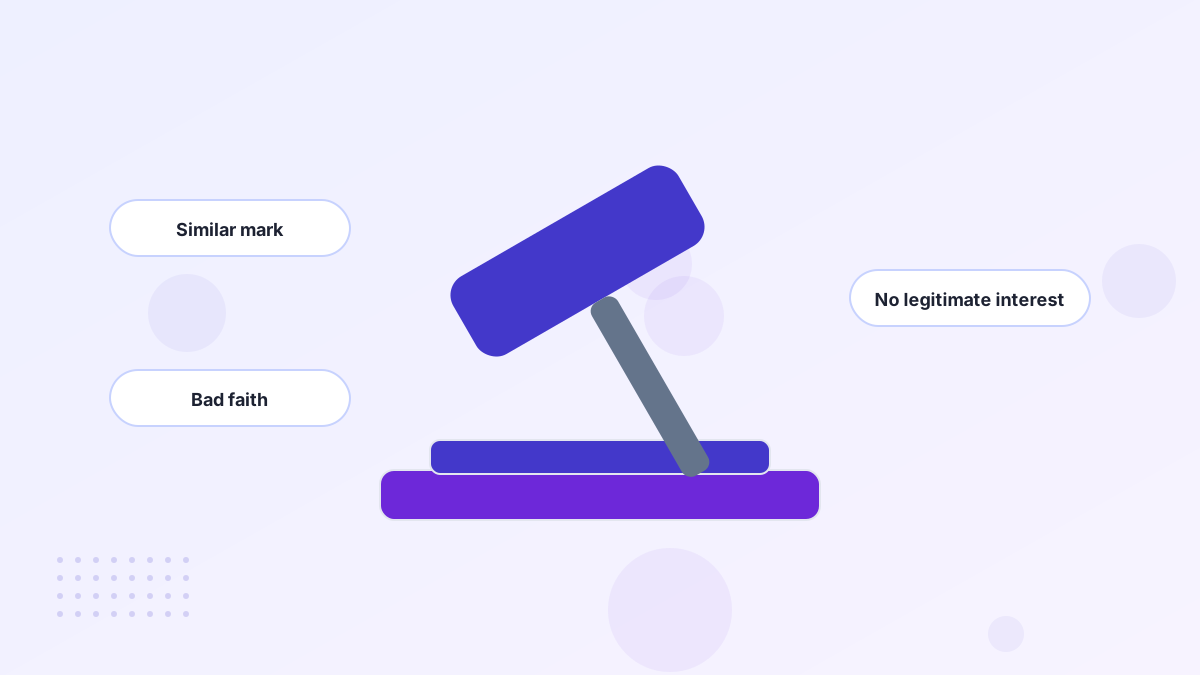
To win, the complainant must prove all three:
- The domain is identical or confusingly similarTo a trademark the complainant has rights in.
- The registrant has no rights or legitimate interestsIn the domain.
- The domain was registered and is being used in bad faithBoth, under the UDRP.
If any element fails, the complaint fails.
What Counts as Bad Faith
- Registering a domain mainly to sell it to the trademark owner or a competitor.
- Registering to block the owner from using their mark, as part of a pattern.
- Registering mainly to disrupt a competitor's business.
- Using the domain to attract visitors by creating confusion with the mark.
Legitimate Interests
A registrant can show legitimate interests by using the domain for a genuine business before any notice of the dispute, being commonly known by the name, or making legitimate non-commercial or fair use. Owning a dictionary word domain and using it for its ordinary meaning is often a strong defense.
Costs and Timelines
| Option | Fee |
|---|---|
| Single panelist | $1,500 |
| Three-member panel | $4,000 |
| Expedited processing (introduced March 2026) | $4,000, with a decision targeted within one month |
Legal fees are extra. A standard case typically takes around two months from filing to decision. Other providers have their own fee schedules.
Possible Outcomes
The only remedies are transfer of the domain to the complainant or cancellation. The UDRP doesn't award money. Panels can also find "reverse domain name hijacking" when a complaint was brought in bad faith to take a domain from a legitimate owner. Either side can still go to court.
Other Dispute Options
- URS: a faster, cheaper process for clear-cut cases in new generic extensions. It can suspend, not transfer, a domain.
- Country-code policies: many have their own procedures.
- Courts: in the US, cybersquatting laws allow lawsuits with damages in some cases.
How Buyers Can Avoid Disputes
Before buying, check that the domain doesn't target someone else's brand. Avoid domains containing famous marks. Use the domain for a genuine business that doesn't trade on another company's reputation. Keep records of your purchase and launch dates, which help show good faith. See trademark checks.
How Brand Owners Can Use the UDRP
Register your trademark, document how the domain is being misused and consider contacting the registrant first, as some will transfer without a dispute. If not, a UDRP complaint is a well-established route. See trademarking your name.
How a UDRP Case Unfolds
- Complaint filedThe complainant files with a provider and pays the fee.
- Domain lockedThe registrar locks the domain to prevent transfers during the case.
- Respondent notifiedThe registrant usually has 20 days to respond.
- Panel appointedOne or three panelists review the evidence.
- DecisionPublished, and implemented after a short waiting period unless a court case is filed.
If You Receive a Complaint
Don't ignore it. Respond within the deadline with evidence of your legitimate interests and good faith: when you bought the domain, why, how you use it and any business records. Consider getting a lawyer with domain dispute experience. Many respondents who use a domain genuinely and didn't target a trademark successfully defend their domains.
Why Premium Domain Buyers Rarely Face Disputes
Most premium brandable domains are invented words or common dictionary terms that weren't registered to target a specific company. Buying such a name for a genuine business, after a basic trademark check, puts you in a strong position. Problems usually arise with domains that contain a well-known brand or closely imitate one.
UDRP vs Going to Court
| UDRP | Court | |
|---|---|---|
| Speed | Usually about two months | Often many months or longer |
| Cost | Provider fee plus optional lawyer | Usually much higher |
| Remedies | Transfer or cancellation only | Can include damages, depending on law |
| Process | Written submissions, no hearing | Full legal proceedings |
UDRP FAQs
Can someone take your domain just because they have a trademark?
No. They must prove all three elements, including bad faith registration and use.
How long does a UDRP case take?
Typically around two months for a standard case. WIPO's expedited option aims for one month.
Does the UDRP apply to country-code domains?
Some country codes use it or a variation. Others have separate procedures.