On This Page
- Domains and Trademarks Are Different
- Step 1: Search First
- Step 2: Choose Your Classes
- Step 3: Choose Your Filing Basis
- US Filing Fees
- Step 4: File and Respond
- Distinctive Names Are Easier to Protect
- Protecting Your Brand Internationally
- Using Your Trademark to Protect Your Domain
- What a Trademark Costs in Total
- Keeping Your Trademark Alive
- Using the ® and ™ Symbols
- Common Filing Mistakes
- Trademark FAQs
This page gives a general overview, mostly about the United States. Trademark rules differ by country. A trademark attorney can advise on your situation and handle the filing.
Domains and Trademarks Are Different
Registering a domain doesn't give you trademark rights, and owning a trademark doesn't automatically give you the domain. A domain is a registration with a registrar. A trademark protects a name used to identify goods or services, and comes from use in business and, in many countries, registration with a trademark office.
A registered trademark helps you stop others using confusingly similar names, take down lookalike sites and recover abusive domains through disputes.
Step 1: Search First
Before filing, search for existing marks that could conflict. Check the trademark office databases in your markets, business registries and the web. A professional clearance search catches more than a DIY search. See domain trademark checks.
Step 2: Choose Your Classes
Trademarks are registered for specific classes of goods and services, based on an international classification system. A software company might file in classes covering software and online services; a clothing brand in clothing and retail. Each class adds cost, so focus on what you sell now and plan to sell soon.
Step 3: Choose Your Filing Basis
| Basis | When to use it |
|---|---|
| Use in commerce | You're already selling under the name |
| Intent to use | You plan to use it soon; you'll show use before registration |
| Foreign application or registration | You've filed in another country first |
US Filing Fees
Since January 2025, the USPTO charges a base application fee of $350 per class for electronic filings. Surcharges apply in some situations, including $100 per class when required information is missing and $200 per class when you write your own description of goods and services instead of using pre-approved wording. Attorney fees are separate and vary.
| Fee | Amount |
|---|---|
| Base application | $350 |
| Insufficient information surcharge | $100 |
| Free-form description surcharge | $200 |
Check the USPTO's current fee schedule before filing, as fees change.
Step 4: File and Respond
After filing, an examiner reviews the application. They may raise issues in a letter called an office action, for example about similarity to another mark or the description of goods. You'll need to respond within the deadline. If approved, the mark is published so others can oppose it, then registered.
The process often takes many months to more than a year, so start early.
Distinctive Names Are Easier to Protect
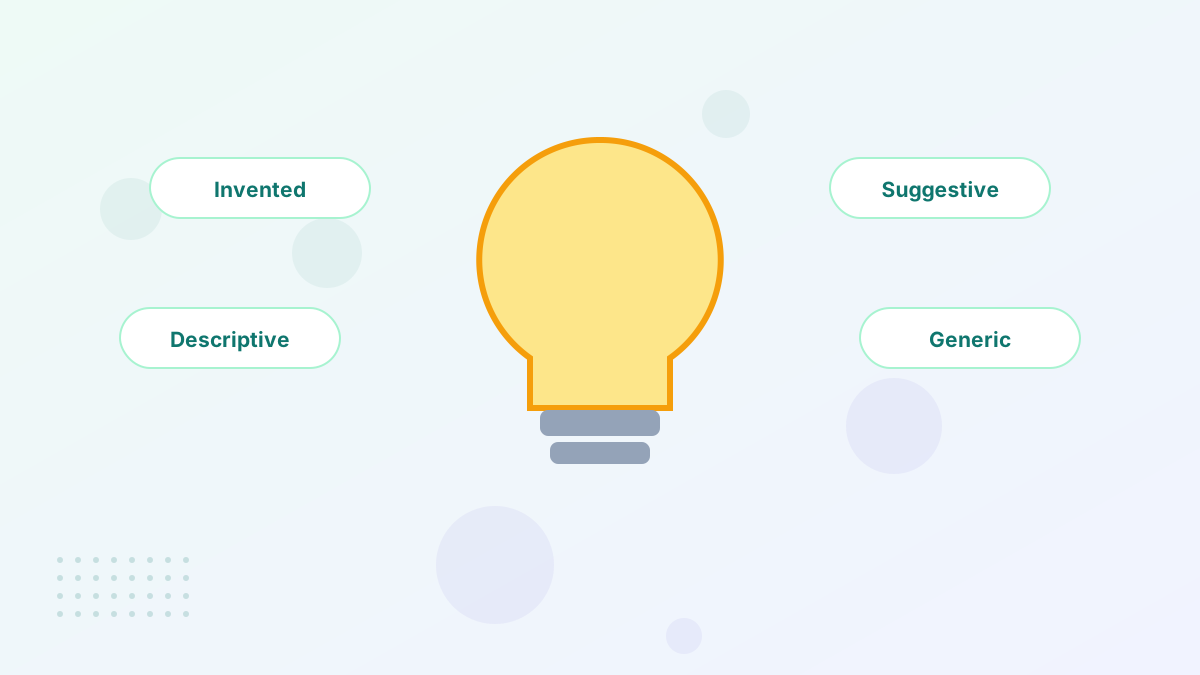
Trademark law favors distinctive names. Invented words and names that suggest rather than describe your product are generally stronger. Purely descriptive names, like "Fast Plumbing", are harder to register and protect. This is one reason founders favor brandable domains.
Protecting Your Brand Internationally
Trademarks are national or regional. If you trade abroad, consider filing in key markets. International filing systems, such as the Madrid Protocol, let you extend one application to many countries, though each country examines it separately and charges its own fees.
Using Your Trademark to Protect Your Domain
- Disputes: a trademark is the basis for recovering abusive domains under the UDRP. See domain disputes.
- Platform takedowns: social and marketplace platforms act faster on trademark complaints.
- Handles: some platforms help trademark owners with impersonating accounts.
What a Trademark Costs in Total
Government fees are only part of the picture. A realistic budget includes a clearance search, attorney time to prepare and file the application, responses to any office actions and, later, maintenance filings to keep the registration alive. For a single class in the US, many small businesses spend from several hundred to a few thousand dollars in total, depending on complexity and whether they use an attorney.
Keeping Your Trademark Alive
Registered trademarks need maintenance. In the US, owners file declarations of continued use at set intervals and renew every ten years. You also need to keep using the mark and to watch for infringers, because rights can weaken if a mark isn't used or defended. Put the key dates in your calendar alongside your domain renewals.
Using the ® and ™ Symbols
In the US, you can use ™ with a name you claim as a trademark at any time. The ® symbol is reserved for marks registered with the USPTO, and using it before registration can cause problems. Other countries have similar rules.
Common Filing Mistakes
- Filing for a descriptive name that's unlikely to be registered.
- Choosing the wrong classes, leaving key products unprotected.
- Writing a custom description when approved wording would avoid surcharges.
- Missing deadlines for responses or maintenance filings.
- Skipping the search and running into an existing mark.
Trademark FAQs
Do you need a trademark to own a domain?
No, but a trademark protects the name in ways a domain registration can't.
How much does a US trademark cost?
USPTO fees start at $350 per class, plus any surcharges and attorney fees.
Can you file before launching?
Yes, with an intent-to-use application in the US. You'll need to show use before registration.