On This Page
- How Domain Registration Works
- What Happens After a Domain Expires
- The Hidden Risk: Expiry Auctions
- What Stops Working When a Domain Expires
- How to Never Miss a Renewal
- Renewal Prices
- Watch Out for Fake Renewal Notices
- If Your Domain Has Already Expired
- Why Businesses Still Lose Domains
- Renewing Multiple Years: Pros and Cons
- Renewals During a Payment Plan
- Domain Renewal FAQs
How Domain Registration Works
Nobody owns a domain forever in one payment. You register it for a period, typically one to ten years for .com, and renew before it ends. A premium domain purchase buys the registration from its current owner; after that, you renew at your registrar's standard rate like any other domain.
As long as you keep renewing, you can keep the domain indefinitely.
What Happens After a Domain Expires
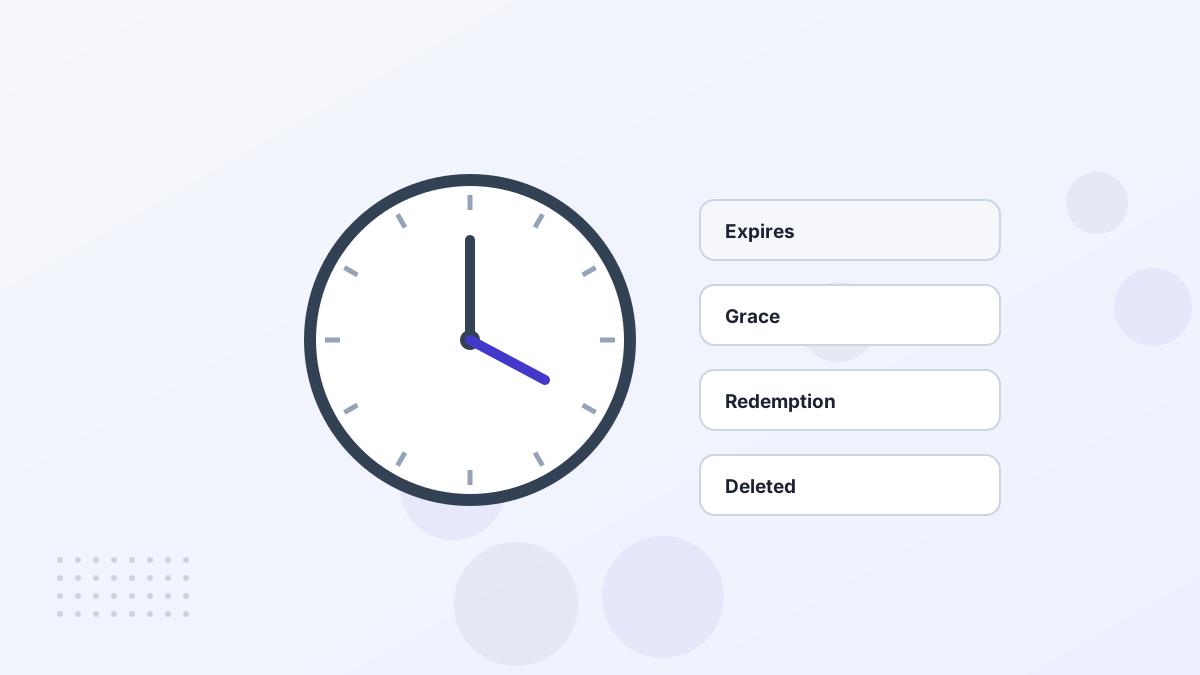
| Stage | Typical length | What you can do | Cost |
|---|---|---|---|
| Renewal grace period | Up to about 45 days, varies by registrar | Renew as normal | Standard renewal, sometimes a late fee |
| Redemption period | About 30 days | Restore the domain | Restore fee, often $100 or more, plus renewal |
| Pending delete | About 5 days | Nothing | Not recoverable |
| Released | - | Anyone can register it | Often caught instantly by drop-catchers |
Country-code domains follow their own registries' rules, and some have shorter or no grace periods.
The Hidden Risk: Expiry Auctions
Many registrars don't simply wait for an expired domain to drop. During the grace period, they may list it in their expired-domain auctions. Your website and email usually stop working soon after expiry, and if you don't renew in time, the domain can be sold to someone else even before it would have dropped.
Valuable domains rarely make it back to the open market. They're renewed, restored or auctioned first. See expiring domains.
What Stops Working When a Domain Expires
- Your website may show a registrar parking page.
- Your email may stop receiving messages.
- Logins and integrations that rely on your domain can fail.
- Search visibility can drop if the outage lasts.
Even a short lapse can cause real damage, which is why prevention matters so much.
How to Never Miss a Renewal
- Turn on auto-renewFor every domain you care about.
- Renew for multiple yearsFive or ten years for key domains.
- Keep payment details currentUpdate cards before they expire.
- Use a monitored emailFor registrar notices.
- Add calendar remindersTwo months before expiry.
- Consolidate domainsAt one or two registrars so nothing is forgotten.
Renewal Prices
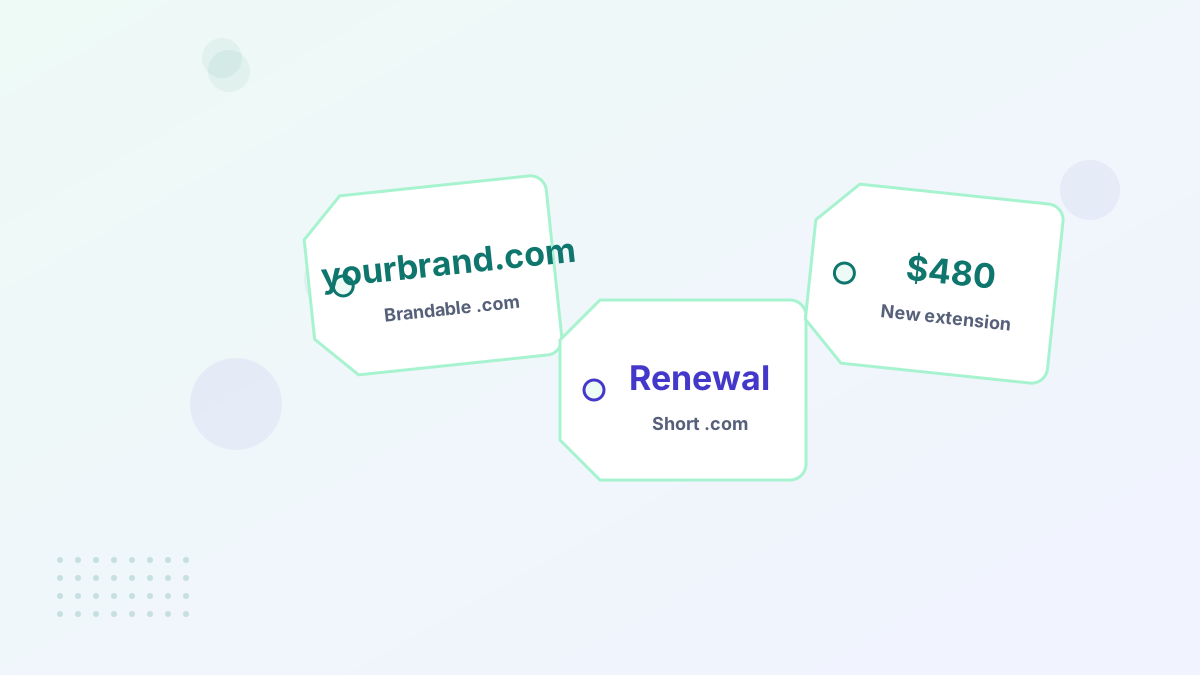
Standard .com renewals are inexpensive, typically somewhere in the low tens of dollars a year depending on the registrar. Some extensions cost more, such as .io and .ai, and registry premium names in some new extensions renew at high prices every year. Check renewal pricing before you buy, not just the first-year price.
Prices can rise over time. Renewing for several years can lock in today's rate at many registrars.
Watch Out for Fake Renewal Notices
Scammers send official-looking "domain expiration" letters and emails, sometimes offering to renew your domain through a different company at an inflated price, or simply phishing for payment details. Only renew through your registrar's own website, which you navigate to directly.
If Your Domain Has Already Expired
- Log in to your registrar immediately and renew if it's in the grace period.
- If it's in redemption, pay the restore fee; it's usually far cheaper than losing it.
- If it's been auctioned or dropped, contact the new owner or place a backorder, and be ready to negotiate.
Why Businesses Still Lose Domains
It's rarely negligence in the usual sense. The most common causes are an expired card on file, renewal notices going to a former employee or agency, a domain registered in someone's personal account, or simply not knowing the domain existed. Each of these is fixed by a little housekeeping: current payment details, a shared monitored inbox and a list of every domain the business owns.
Renewing Multiple Years: Pros and Cons
Pros
- Fewer chances to miss a renewal
- Often locks in current pricing
- One less thing to think about
Cons
- Larger upfront payment
- Less flexibility if you switch registrars
For your main business domain, a long renewal plus auto-renew is cheap peace of mind.
Renewals During a Payment Plan
When you buy a domain on a lease-to-own plan, the marketplace usually holds the registration until your final payment and keeps it renewed in the meantime. Once ownership passes to you, check the expiry date and turn on auto-renew in your own account straight away. See Atom payment plans.
Domain Renewal FAQs
Can you renew a domain for 10 years?
Many generic domains, including .com, can be registered for up to ten years. Some extensions have different limits, like .ai's two-year terms.
Do you renew premium domains at premium prices?
Aftermarket premium domains usually renew at standard rates. Registry premium names may renew at higher prices.
How long after expiry can you recover a domain?
Typically during the grace period and the redemption period, roughly 75 days in total for .com, but don't rely on it.