On This Page
How Domain Auctions Work
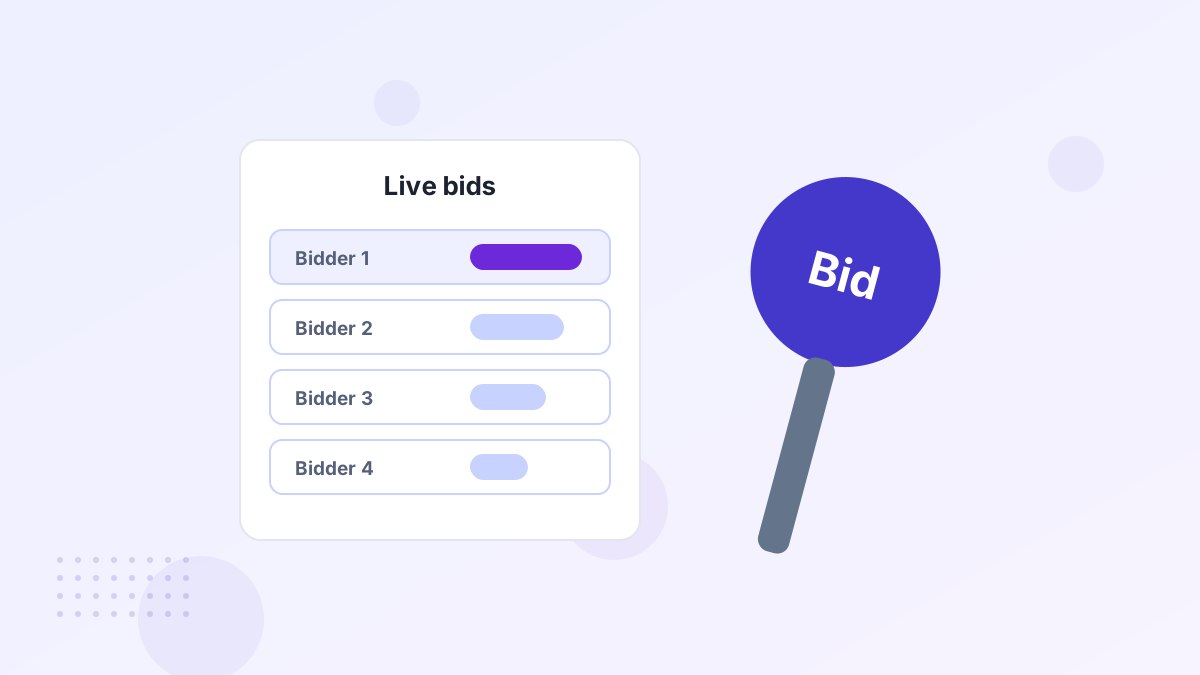
A domain auction lists a name with a starting bid and a deadline. Buyers bid against each other, and the highest bid when the clock runs out wins, provided it meets any hidden reserve price the seller has set.
Most platforms use proxy bidding, where you enter your maximum and the system bids for you in small steps only as needed. Many also extend the auction by a few minutes when bids arrive at the very end, which stops last-second sniping from always winning.
The Three Kinds of Domain Auction
Expired-Name Auctions
Names their owners didn't renew, auctioned by the registrar before they're deleted. Large volume, mixed quality.
Backorder Auctions
When several people backorder the same name and a service catches it, a private auction decides who gets it.
Marketplace Auctions
Owners auction names they want to sell, often with reserves. Atom runs auctions on selected premium names.
The type matters because the risks differ. Expired names may carry history you need to check, while owner-listed auctions are closer to a normal marketplace purchase with a competitive twist.
The Main Auction Platforms
| Platform | Main inventory | Worth knowing |
|---|---|---|
| GoDaddy Auctions | Expiring names from GoDaddy plus listed names | Largest volume; needs a low-cost membership to bid |
| NameJet and SnapNames | Expiring names from partner registrars | Backorder first; auction if others want the same name |
| DropCatch | Names caught at the drop | Auctions among backorder holders |
| Sedo and Dynadot | Owner-listed and expiring names | Mix of international and investor inventory |
| Atom Auctions | Selected premium brandables | Curated names at auction prices |
If you're a founder looking for a brand name rather than an investor hunting bargains, curated auctions like Atom's are usually the most relevant, because the names have already been screened for quality.
What Winning Really Costs
The winning bid is rarely the whole bill. Before you bid, add up the extras so your maximum reflects the true total.
- Registration or renewal: many expired-name auctions add a year of registration to the winning price.
- Platform membership: some auction sites charge a small yearly fee to bid.
- Backorder fees: drop-catch auctions often require a backorder fee upfront, sometimes credited toward your bid.
- Transfer costs: moving the domain to your registrar later usually adds a year at standard rates.
How to Set Your Maximum Bid
- Research comparable namesLook at listed prices and recent sales for similar length, words and extension.
- Value it for your businessWhat's the name worth to you over the years you'll use it?
- Price the alternativeWhat would the next-best available name cost you?
- Write down your maximumAnd commit to it before the auction gets exciting.
Our domain valuation guide explains how to estimate a fair figure.
Bidding Tactics That Work
- Use proxy bidding with your true maximum, so you don't get drawn into manual bidding wars.
- Watch before you bid to gauge interest. Early bids reveal demand and can push prices up.
- Expect extensions near the end and don't count on sniping.
- Avoid emotional increments. If the price passes your limit, let it go.
- Look for low-interest auctions where strong names attract few bidders.
Auction Formats Explained
Not every auction works the same way, and the format changes your strategy.
- Ascending (English) auctions show the current price and let bids rise until the deadline. Most domain auctions work like this.
- Closeouts and reverse auctions start high and drop over time until someone buys. Patience can pay, but someone else may buy first.
- Private backorder auctions are open only to people who backordered the name. Fewer bidders, but often keen ones.
- No-reserve auctions sell to the highest bidder whatever the price, which attracts bargain hunters.
A Worked Example
Imagine you want a two-word .com for a new product, and a similar listed name costs about $4,000. You decide the auction name is worth up to $3,000 to you, because the listed alternative is slightly better. You add the year of registration included in the winning price, so you set your proxy maximum just under $3,000.
The auction climbs quickly to $2,200, slows, and finishes at $2,650 after two extensions. You win below your limit. Had it passed $3,000, you'd have bought the listed name instead, with no regret. That's the point of deciding your maximum in advance: the outcome is good either way.
Due Diligence Before You Bid
Winning an auction is a commitment to pay, so do your checks first. This is especially important for expired names, which may have hosted other sites.
- History: check web archives for spam or a previous brand. See domain history.
- Trademarks: search for conflicting marks. See trademark checks.
- Renewal price: confirm it isn't a registry premium with high yearly costs.
- Platform terms: know the payment deadline and what happens if you don't pay.
Auction or Buy Now?
Auction Makes Sense If
- You're flexible on the exact name
- You can wait for the auction to finish
- You have a firm maximum and will stick to it
Buy Now Makes Sense If
- You've found the one name you want
- You need it for a launch date
- You want a payment plan
Common Auction Mistakes
Ignoring the Reserve
Top bidder doesn't mean winner if the reserve isn't met.
Forgetting Extra Costs
Registration and fees add to the winning bid.
Chasing the Win
Overpaying to beat another bidder is still overpaying.
Skipping Checks
An expired name's past can follow it.
Domain Auction FAQs
Are domain auctions cheaper than buying outright?
Sometimes, especially with little competition. Competitive auctions can exceed what a similar listed name costs.
What happens if you win but don't pay?
Platforms usually cancel the sale and may suspend your account. Only bid if you're ready to pay promptly.
Can you buy auction names on a payment plan?
Usually not. Auctions are typically settled with a single payment. Listed names are more likely to offer plans.