On This Page
- What New Extensions Are
- Main Types of New Extension
- How Search Engines Treat Them
- The Renewal Price Trap
- Trust and Recognition
- Security-Focused Extensions
- When a New Extension Makes Sense
- When to Be Cautious
- A Worked Example
- Registry Premium Names Explained
- Checklist Before You Buy
- More Extensions Are Coming
- New Domain Extension FAQs
What New Extensions Are
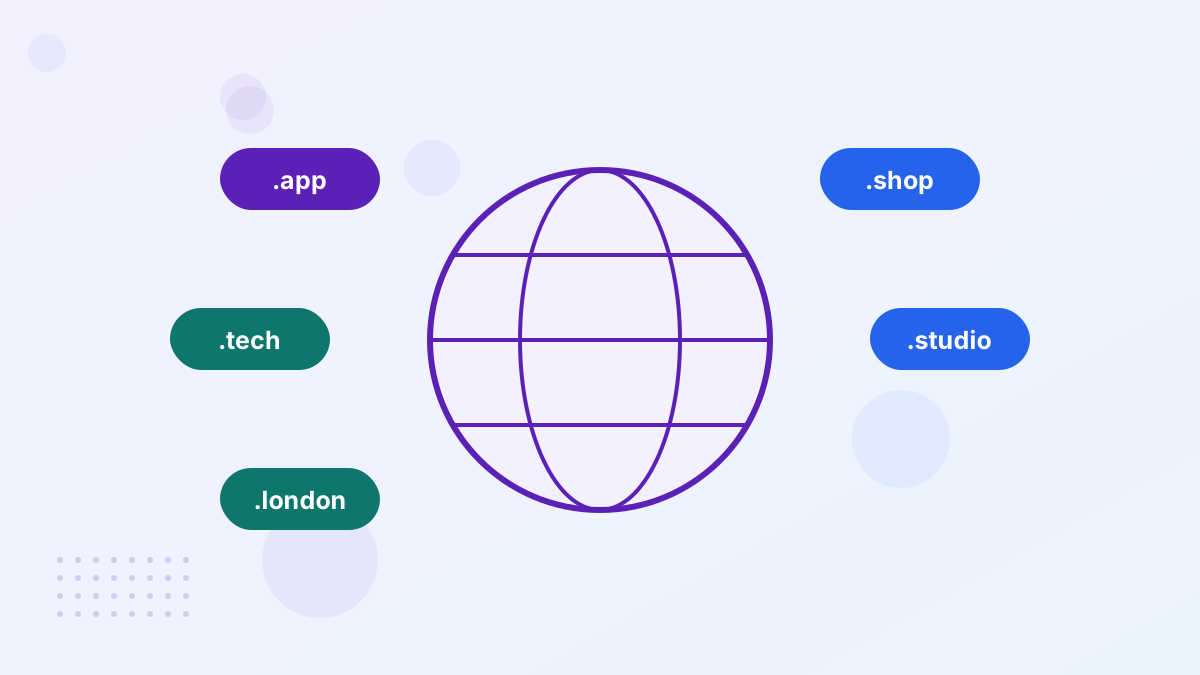
New generic top-level domains, often called new gTLDs, are extensions introduced through ICANN's expansion program, which began delegating them in 2013. There are now hundreds, covering industries (.tech, .law), activities (.shop, .app), places (.london, .nyc) and brands owned by companies for their own use.
They give you far more choice. A name that's long taken in .com may be available in .studio or .shop at a standard price.
Main Types of New Extension
| Type | Examples | Typical use |
|---|---|---|
| Industry | .tech, .law, .dental | Signaling your field |
| Activity | .shop, .app, .blog | Describing what the site does |
| Geographic | .london, .nyc, .berlin | City-focused businesses |
| Generic words | .online, .site, .xyz | Broad, often low-cost |
| Brand | Company-owned extensions | Not open to the public |
How Search Engines Treat Them
Google has said new generic extensions are treated like any other generic extension. A .shop or .app domain doesn't rank better or worse because of its extension. Geographic extensions such as .london are also treated as generic, not as a country signal.
Some extensions with a history of heavy spam use have been viewed with suspicion by email filters and some users, which is worth considering for cheap generic options.
The Renewal Price Trap
This is the biggest practical risk. Some new extensions are sold with very low first-year prices, then renew at much higher rates. Others classify certain names as "registry premium", with high prices every year, not just the first.
Before buying any new extension, look at the yearly renewal cost and whether the name is a registry premium. Multiply by the years you'll use it.
Trust and Recognition
Familiarity has grown, but many people still expect .com or their country code. Some users see unfamiliar extensions as less trustworthy, or don't recognize them as web addresses at all when written in text. Extensions that clearly describe something, like .shop or .app, tend to be understood more easily than abstract ones.
Security-Focused Extensions
Some extensions, including .app and .dev, are on the browser HSTS preload list, which means sites must use HTTPS. That's good for security and simply means you need an SSL certificate, which most hosts provide automatically.
When a New Extension Makes Sense
Descriptive Projects
A recipe blog on .kitchen or a portfolio on .studio reads naturally.
Campaigns and Microsites
Short-lived sites where memorability matters more than long-term trust.
Secondary Domains
Redirects or product sites alongside your .com.
Local Brands
City extensions for businesses rooted in one place.
When to Be Cautious
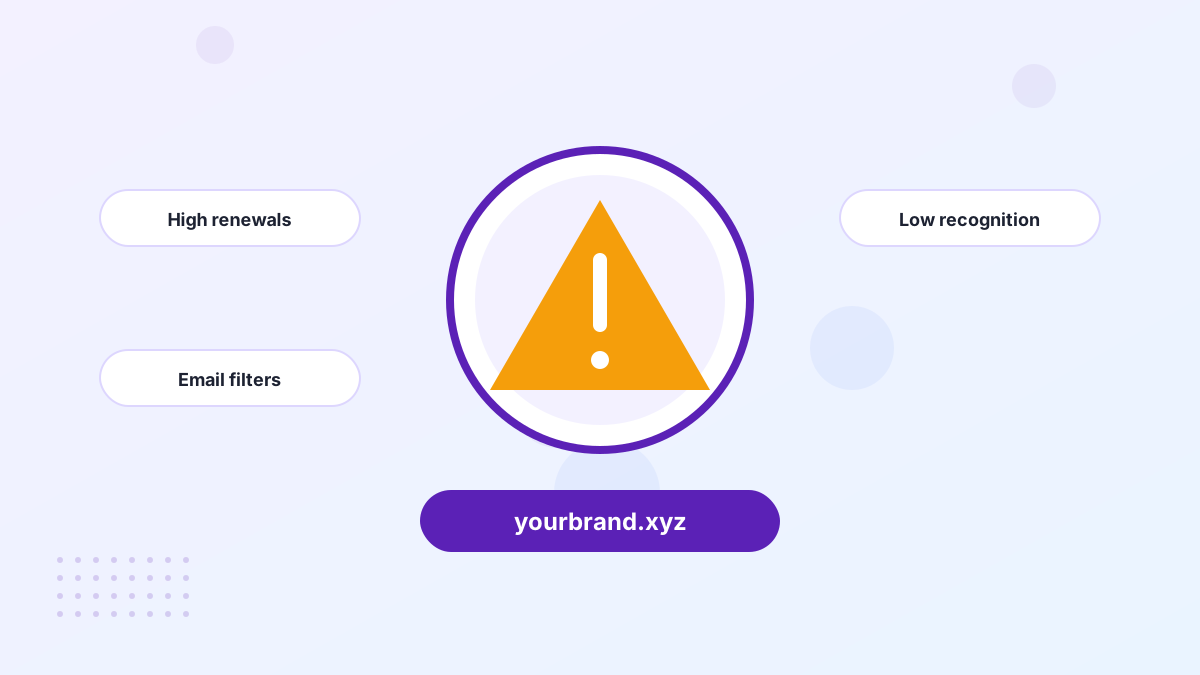
- Your main business brand, if your customers are less tech-savvy.
- Heavy email use, where some filters treat lesser-known extensions more strictly.
- A competitor owns the .com of the same name.
- High renewal pricing that makes the domain expensive over time.
A Worked Example
Suppose you're launching a bakery and find yourbrand.shop available for a few dollars in year one, while yourbrand.com is a $2,800 premium name. Checking renewals, you see the .shop renews at a standard rate, but customers in a quick poll mostly typed .com when they heard the name. You decide to use the .com as your main domain on a payment plan and register the .shop as a redirect for printed menus. That combination gives you both trust and a memorable short link.
Registry Premium Names Explained
Registries running new extensions often reserve their most desirable names, such as short words and popular terms, and sell them at premium prices. Unlike aftermarket premium domains, where you pay a one-off price to an owner and then standard renewals, some registry premiums carry a high price every single year.
Before buying, check whether the renewal price matches the first-year price. A name costing hundreds of dollars every year can be more expensive over time than buying a premium .com once. See premium domain renewal fees.
Checklist Before You Buy
- Check the renewal priceAnd whether it's a registry premium.
- Check who owns the .comAnd whether they're a competitor.
- Say it aloudWill people recognize it as a web address?
- Test email deliverySend test messages to major providers.
- Check registry rulesSome extensions have use restrictions.
More Extensions Are Coming
ICANN has been preparing a new round of extension applications, which means more options will appear over the next few years. That increases choice but also makes the familiarity of .com and country codes more valuable as a stable anchor for your brand.
New Domain Extension FAQs
Are new extensions bad for SEO?
No. Search engines treat them like other generic extensions.
Why are some new extension names so expensive?
Registries can classify desirable names as premium, with higher prices that sometimes apply every year.
Can you use a new extension for a business?
Yes, though consider your audience's familiarity and renewal costs.