On This Page
- Before You Contact Anyone
- Check Whether Negotiation Is Even Needed
- Write a Low-Key First Message
- Responding to the Owner's Price
- Making Your First Offer
- Handling Counteroffers
- Negotiate More Than the Price
- Reading the Owner
- Mistakes That Push Prices Up
- Knowing When to Walk Away
- When to Use a Broker Instead
- Closing the Deal Safely
- Domain Negotiation FAQs
Before You Contact Anyone
Preparation matters more than persuasion. Before you send a single message, answer three questions: what the domain is realistically worth, the most you'll pay, and which alternatives you'd happily use instead.
Know the Value
Compare similar names and run appraisals. See domain valuation.
Set a Walk-Away Price
Write it down. It stops you from overpaying in the heat of the moment.
Line Up Alternatives
Two or three strong backups give you the confidence to walk away.
Alternatives are your real leverage. If the owner senses you have no other options, the price rises. If you'd genuinely be happy with a listed alternative, you can negotiate calmly.
Check Whether Negotiation Is Even Needed
If the domain is listed with a buy-now price on a marketplace, you may not need to negotiate at all. Many curated marketplaces, including Atom, show fixed prices on most names, and some listings accept offers.
On a fixed-price listing, the price is usually the price. On an offer-enabled listing, a reasonable offer can work. On an unlisted domain, you'll need to contact the owner directly or through a broker.
Write a Low-Key First Message

Keep your first message short and neutral. Use a personal or generic email address rather than your company domain, and don't mention your business, funding or plans.
"Hello, is yourname.com available to purchase? If so, what price would you consider? Thanks."
The aim is to get the owner to name a price first. Whoever names the first number anchors the negotiation, and you want that anchor to be theirs, not your budget.
Responding to the Owner's Price
Owners of unlisted names often open high, expecting to negotiate. Don't react emotionally to the first number. Thank them, and take a day to compare it with your research.
- If it's below your walk-away price, consider a modest counter or simply accept if it's fair.
- If it's somewhat above, counter with a reasoned offer and room to move.
- If it's far above, say politely that it's beyond your budget and share the range you had in mind.
Making Your First Offer
If you have to open, make an offer below your maximum but not so low that it's insulting. Guides suggest opening anywhere from roughly a fifth to half below your ceiling, depending on how strong the name is and how motivated the owner seems.
Back your offer with reasoning rather than opinion, such as the prices of comparable names. Evidence-based offers are taken more seriously and are harder to dismiss.
Handling Counteroffers
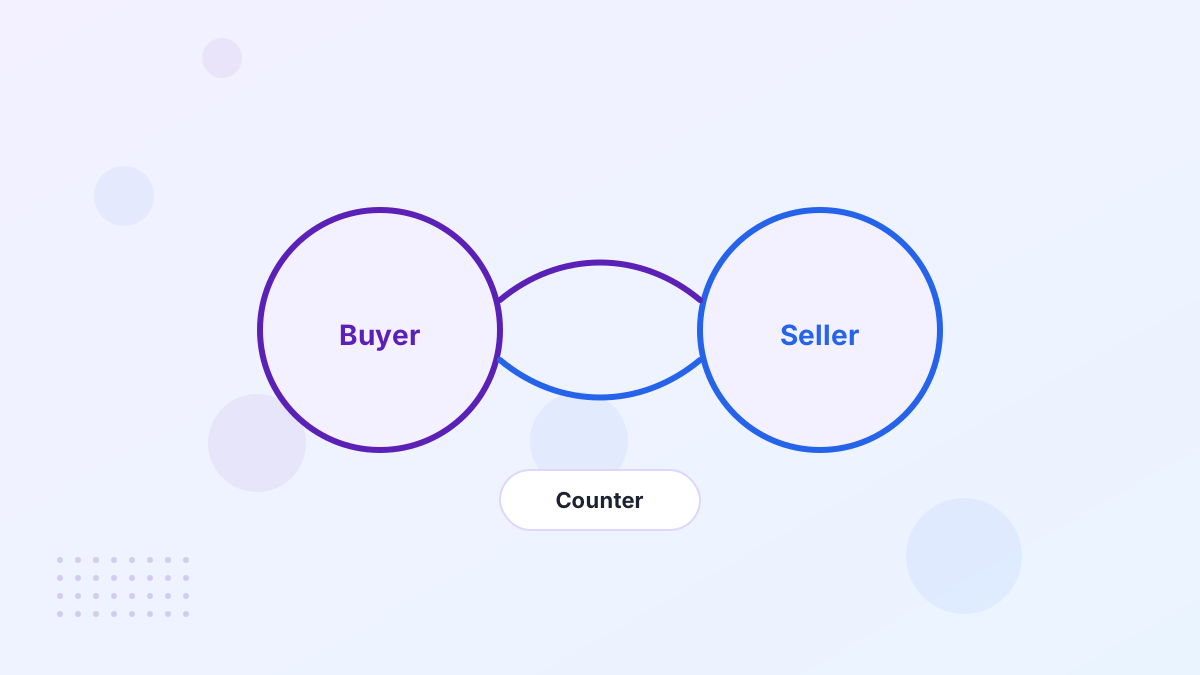
Expect two or three rounds before you agree. Each time you raise your offer, make the increase smaller than the last. Shrinking increments signal that you're approaching your limit without you having to say so.
| Round | Seller | Buyer | Buyer's increase |
|---|---|---|---|
| 1 | $12,000 | $5,000 | Opening offer |
| 2 | $10,000 | $6,500 | +$1,500 |
| 3 | $8,500 | $7,250 | +$750 |
| 4 | Agreed at $7,500 | Accepted | +$250 |
These figures are illustrative. The pattern is what matters: steady, shrinking moves that converge on a fair number.
Negotiate More Than the Price
Price isn't the only lever. Sometimes the owner cares more about speed, certainty or simplicity than the last few hundred dollars.
- Offer a fast close through escrow.
- Propose a payment plan held in escrow, if cash flow matters to you.
- Offer to cover escrow fees in exchange for a lower price.
- Agree a clean transfer method that's easy for the owner.
Reading the Owner
Different owners negotiate differently, and spotting the type helps you pitch your approach.
| Owner type | Typical signs | Approach that tends to work |
|---|---|---|
| Domain investor | Parked page, portfolio of names, quick replies | Evidence-based offers; they think in comparable sales |
| Former business | Old website or redirect, slow replies | Patience; emphasize a simple, safe process |
| Individual with a side project | Personal site or blank page | Friendly tone; fair offer; offer to cover fees |
| Active business | Live site using the name | Usually not for sale; consider a broker or alternatives |
Mistakes That Push Prices Up
- Emailing from your company address, which reveals who's buying.
- Explaining your plans or how perfect the name is for you.
- Showing urgency, such as a launch date next week.
- Bidding against yourself by raising your offer before the owner responds.
- Negotiating by phone without a written record of offers.
Keeping negotiations by email gives you a clear record of what was offered and agreed, which matters when you put the final terms in writing.
Knowing When to Walk Away
If the gap between your walk-away price and the owner's lowest number won't close, thank them and leave the door open. Owners sometimes come back weeks or months later, especially if renewal time approaches.
Meanwhile, move on to your alternatives. A strong name at a fair price beats a perfect name at a price that strains your business. Our guide on what to do when a domain costs too much lists options.
When to Use a Broker Instead
A broker negotiates on your behalf, keeps your identity private and brings experience in pricing offers. That's especially useful if you're a recognizable company, the name is worth several thousand dollars or more, or the owner is hard to reach.
Brokers charge fees or commissions, so they make most sense on higher-value names. See our domain broker guide and Atom's broker service.
Closing the Deal Safely
- Confirm terms in writingDomain, price, fees, transfer method and timeline.
- Verify the seller controls the domainAsk for a DNS change you specify.
- Use escrowNever pay a stranger directly. See domain escrow.
- Complete the transfer and confirm controlThen release funds.
Domain Negotiation FAQs
Should you make the first offer?
Ask the owner to name a price first if you can. If you must open, offer below your maximum with evidence to support the number.
How low should a first offer be?
Low enough to leave room to move, but not insulting. Many guides suggest opening well below your ceiling, then raising in shrinking steps.
Can you negotiate on marketplace listings?
Only on listings that accept offers. Fixed-price listings are sold at the listed price.