On This Page
- What a Domain Name Generator Does
- The Main Types of Generator
- Available vs Premium Results
- How to Get Better Results
- Prompt Ideas for AI Generators
- The Limits of Generators
- From Long List to Final Name
- A Worked Example
- Generators for Different Naming Styles
- Checking Availability Properly
- Generators vs Contests vs Agencies
- Common Generator Mistakes
- Domain Name Generator FAQs
What a Domain Name Generator Does
A domain name generator takes a keyword or description and produces name ideas, usually with a check of whether the matching domain is available. Some combine words, some add prefixes and suffixes, some invent new words, and newer tools use AI to suggest names based on a description of your business.
Their real value is volume. In a few minutes you can see hundreds of combinations you'd never have thought of, which is exactly what the early stage of naming needs.
The Main Types of Generator
| Type | How it works | Good for | Weakness |
|---|---|---|---|
| Keyword combiners | Add words, prefixes and suffixes to your keyword | Descriptive names | Often long or generic |
| Word inventors | Blend and alter letters to create new words | Brandable names | Many results are unpronounceable |
| AI generators | Suggest names from a business description | Fresh angles and themes | Can repeat common patterns |
| Registrar generators | Suggest available domains to register | Cheap available names | Best names are rarely unregistered |
| Marketplace generators | Match ideas to premium names for sale | Names with strong .coms | Higher prices than registration |
Available vs Premium Results
Registrar generators show names you can register today for a standard fee. Because most short, memorable .coms are already registered, those results often lean toward longer combinations, unusual spellings or less common extensions.
Marketplace generators, such as Atom's name generator, show names that are already registered and for sale. They cost more, but the quality is usually higher because the names were chosen for brandability in the first place. Many founders use both: registrar tools for inspiration, marketplace tools to find the name they'll actually buy.
How to Get Better Results
- Use several seed words: benefits, feelings and metaphors, not only what you sell.
- Try related languages: Latin, Greek or other roots can spark ideas.
- Describe the brand, not the product, when using AI tools. "Calm, trustworthy, modern" works better than "software".
- Filter by length to keep results short.
- Save everything interesting, even half-good ideas. They often combine into something better.
Prompt Ideas for AI Generators
AI tools respond to detail. Instead of "name for a coffee brand", try a short brief: who it's for, the feeling you want, sounds to avoid and the length. Ask for invented words, real words and compounds separately, then ask for variations on the three you like most.
"Suggest 30 short, easy-to-spell brand names for an eco-friendly cleaning product for young families. Warm and simple, two syllables, no puns, no 'eco' prefix."
The Limits of Generators
Generators don't know your market, your competitors or your trademark landscape. They can't tell you whether a name is easy to spell when spoken, or whether it means something awkward in another language. And they often produce names that look fine but sound odd aloud.
Generators Are Great For
- Breaking a creative block
- Producing a long list fast
- Checking availability instantly
Generators Can't
- Check trademarks reliably
- Judge how a name sounds
- Know your brand strategy
From Long List to Final Name
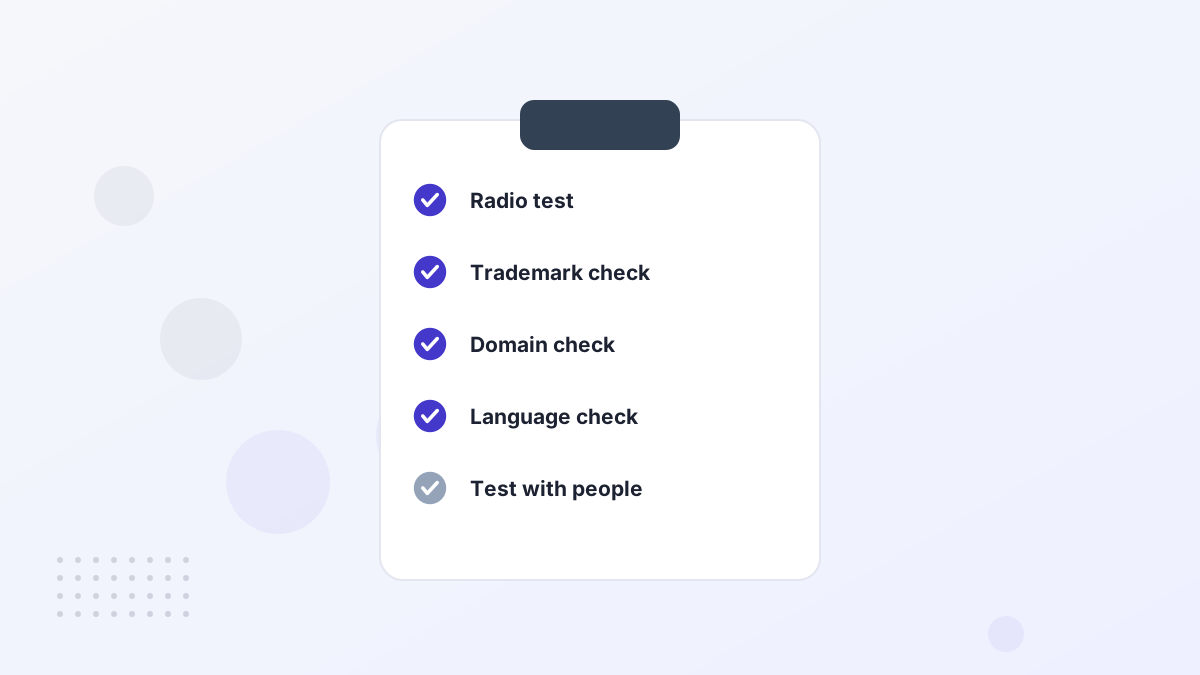
- Collect 100+ ideasFrom several generators and your own brainstorming.
- Cut ruthlesslyRemove anything hard to spell, long or generic.
- Run the radio testOn the top 15.
- Check domains and trademarksOn the top 10.
- Test with real peopleOn the top three to five.
Our guide to testing a brand name covers the final step.
A Worked Example
Imagine you're naming a bookkeeping service for freelancers. A keyword combiner gives you "freelancebooks", "bookspro" and dozens of similar names, mostly taken or long. A word inventor suggests blends like "ledgerly" and "taxora", some of which are pronounceable. An AI tool, given a short brief, offers metaphors such as calm harbors and steady compasses.
You save 40 favorites, cut them to ten using the radio test, and find that six have .coms for sale on marketplaces within your budget. Two survive trademark checks. That's a typical funnel: lots of raw ideas, a handful of genuinely ownable names.
Generators for Different Naming Styles
Descriptive Names
Keyword combiners work well. Expect longer results and check that the name still reads cleanly.
Invented Names
Word inventors and AI tools shine. Say every result aloud before keeping it.
Real-Word Names
Thesaurus tools and marketplaces are more useful, because the .coms are almost always registered.
Compound Names
Combine two short words you like; generators help you see many pairings quickly.
Checking Availability Properly
When a generator says a domain is available, it usually means unregistered. When it shows a premium price, the name is registered and listed for sale. Neither tells you whether the name is legally safe or free on social platforms. Before you get attached, check the exact .com, look for trademarks in your industry and search the main social platforms. See matching social handles.
Generators vs Contests vs Agencies
Generators are free and instant, but you do all the judging. Naming contests add human creativity and some filtering for a few hundred dollars. Agencies add strategy, research and legal screening for thousands or more. Choose based on budget, stakes and how much time you have. See naming contests and naming agency costs.
Common Generator Mistakes
- Taking the first available result because it's convenient.
- Accepting odd spellings to get an unregistered .com.
- Skipping legal checks because the tool said "available".
- Using only one tool, which narrows your ideas.
Domain Name Generator FAQs
Are domain name generators free?
Most are free to use. You pay only if you register or buy a domain.
Does "available" mean you can use the name?
It means the domain can be registered. You still need to check trademarks and existing businesses.
Are AI name generators better?
They're good at themes and variety, but still need human judgment and testing.