On This Page
- How Naming Contests Work
- What You Typically Get
- What It Costs
- Writing a Brief That Gets Good Entries
- Running the Contest Well
- How Long a Contest Takes
- Rating Entries Effectively
- A Worked Example
- Avoiding Common Contest Pitfalls
- Pros and Cons
- Contests vs Other Options
- When a Contest Makes Sense
- Naming Contest FAQs
How Naming Contests Work
You write a brief describing your business, audience and preferences, then pay a fee. The platform shares the brief with its community of creatives, who submit name ideas over several days. You rate entries to guide them, pick a winner and the winner is paid from your fee.
Atom, which began as the crowdsourced naming platform Squadhelp, is one of the best-known places to run naming contests. Its packages start at around $299, with higher tiers adding extras such as validation and branding support.
What You Typically Get
- Volume: popular contests attract hundreds or even thousands of entries.
- Variety: many styles from people with different backgrounds.
- Feedback tools: rate entries so creatives focus on what you like.
- Domain checks: platforms often check or match domains for entries.
- Optional extras: testing, trademark screening or consultations on higher tiers.
What It Costs
| Cost | What to expect |
|---|---|
| Contest package | From a few hundred dollars, more for premium tiers |
| Domain | Separate: registration fee, or premium price if the name's .com is for sale |
| Add-ons | Extra visibility, testing or trademark support |
| Trademark filing | Separate legal and filing fees |
Check the current package details and what's included before you start, because features vary by tier and change over time.
Writing a Brief That Gets Good Entries
The brief is the single biggest factor in contest quality. Vague briefs get generic names.
- Explain what you doIn plain language, in two or three sentences.
- Describe your audienceWho they are and what they care about.
- Set the toneThree to five adjectives for how the brand should feel.
- Give examplesBrand names you admire, and ones you don't, with reasons.
- State requirementsLength, style, extension and words to avoid.
Running the Contest Well
Contests reward engagement. Rate entries early and often, leave short comments on why you like or dislike names, and update the brief if you realize something's missing. Creatives watch your ratings closely and adjust their submissions.
Narrow down in stages. Shortlist your favorites, check domains and trademarks for them, then test the finalists with real people before choosing a winner. See testing a brand name.
How Long a Contest Takes
Most contests run for a set period, often around a week, though platforms offer different durations and extensions. Entries tend to arrive fastest in the first few days, then slow down. The final days often bring stronger entries from creatives who have read your feedback.
Plan an extra few days after the contest closes for domain, trademark and testing checks on your finalists. A realistic timeline from brief to chosen name is one to two weeks.
Rating Entries Effectively
- Rate within the first day, so creatives see your direction early.
- Explain your ratings in short comments, such as "love the sound, too long".
- Highlight patterns: "more names like this one" helps everyone.
- Eliminate clearly off-brief entries to keep the pool focused.
- Invite your team to rate privately, then compare.
A Worked Example
Imagine a small skincare brand runs a contest with a clear brief: gentle, natural, two syllables, no plant names. The first day brings 150 entries. The founder rates them, comments that she likes soft vowel sounds and dislikes anything clinical, and updates the brief with two example brands she admires.
By the end, there are several hundred entries and a shortlist of eight. Three have .coms she can buy at reasonable prices. After a quick customer survey, she picks the one most people spelled correctly and described as "calm". The total spend is the contest fee plus the domain, far below an agency quote.
Avoiding Common Contest Pitfalls
The biggest risk is choosing a name only because it's the best of the entries you received. If nothing feels right, revisit the brief, extend the contest or look at ready-made names on the marketplace. Also remember that platforms check domains, not trademarks in depth, so run your own checks before you commit. See domain trademark checks.
Pros and Cons
Pros
- Many ideas quickly
- Affordable compared with agencies
- Fresh outside perspectives
- Domain checks built in
Cons
- Quality varies; you do the filtering
- Less strategic depth than agencies
- Domains may cost extra
- Trademark clearance is still your job
Contests vs Other Options
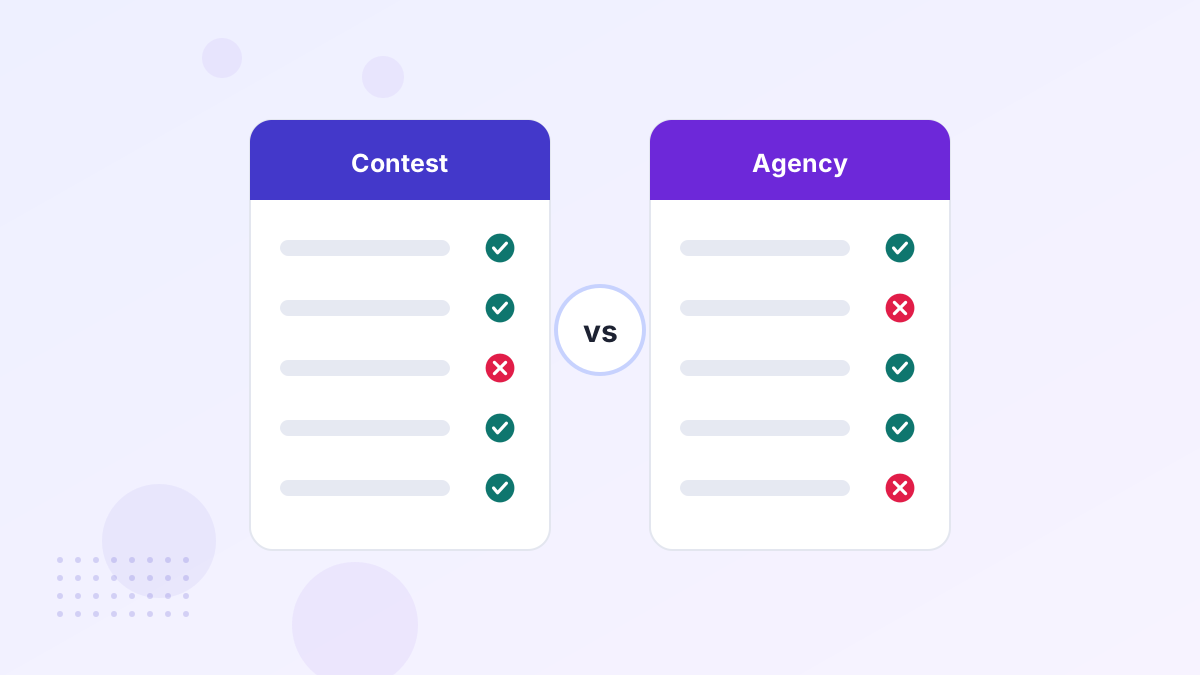
| DIY | Contest | Agency | |
|---|---|---|---|
| Cost | Lowest | Low to moderate | Highest |
| Ideas | Limited to your team | Hundreds | Curated |
| Strategy | Yours | Light | Deep |
| Speed | Varies | Days | Weeks |
See naming agency costs for the full agency picture.
When a Contest Makes Sense
- You're stuck and need fresh ideas.
- Your budget is modest but naming matters.
- You want to move within a week or two.
- You're comfortable judging and testing names yourself.
Naming Contest FAQs
Do you own the winning name?
Contest platforms typically transfer rights to the winning entry once paid. Check the platform's terms.
Is the domain included?
Usually not. You'll register or buy the domain separately.
What if you don't like any entries?
Check the platform's guarantee and refund terms before starting. Some guarantee a winner payout.