On This Page
The Quick Answer
Choose a brandable domain if you're building a company you want to grow, protect and expand over time. Choose a keyword domain if you're a local or single-service business where instantly telling people what you do matters more than standing out.
| Brandable | Keyword (exact-match) | |
|---|---|---|
| Example pattern | An invented or compound name | A service plus a place or modifier |
| Clarity on first sight | Low until you build the brand | High |
| Memorability | High if short and distinctive | Medium; similar names blur together |
| Trademark protection | Easier | Harder for descriptive phrases |
| Room to grow | High | Limited to the described service |
| SEO | Neutral; relies on content | Small relevance signal at best |
What Keyword Domains Do Well
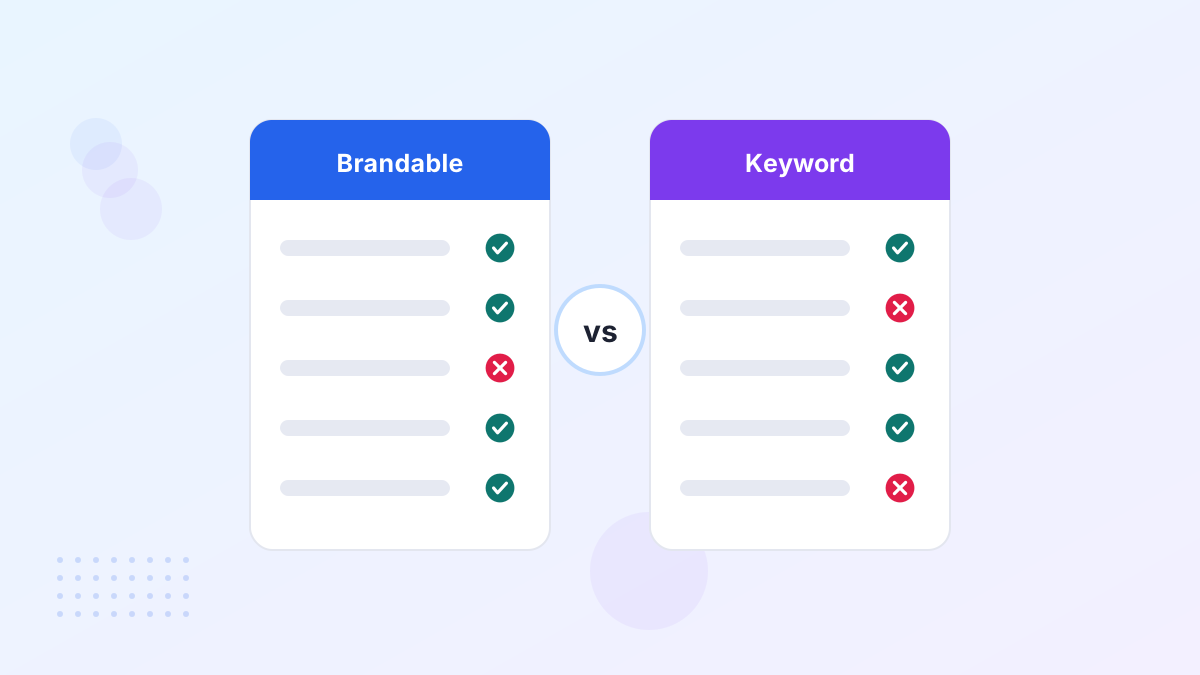
A keyword domain, sometimes called an exact-match domain, uses the words people already search for, such as a service and a city. Its biggest strength is instant clarity: someone reading the address knows what you offer before clicking.
That clarity can help in ads, on vehicles and in local listings. For a plumber, a tutoring service or a niche online store, it can lower the effort needed to explain the business.
Where Keyword Domains Fall Short
- Hard to trademark. Descriptive phrases are difficult to protect, so competitors can use very similar names.
- Easy to confuse. Many businesses use near-identical keyword names, so customers mix them up.
- Hard to expand. A name built around one service feels wrong when you add another.
- Weaker SEO than people expect. Google's 2012 exact-match domain update targeted low-quality sites that relied on keyword domains, and the domain alone is no longer a meaningful ranking shortcut.
What Brandable Domains Do Well
Brandable domains create an identity rather than a description. When they're short and easy to say, they're memorable, and memorability drives word of mouth and direct visits.
They're also easier to protect, which matters as your marketing builds value in the name, and they stretch across products and markets. That's why most startups and consumer brands choose them. See our guide to brandable domain names.
Where Brandable Domains Fall Short
A brandable name starts empty. Customers don't know what you do until you tell them, so you'll lean on taglines, design and marketing early on. A weak brandable that's hard to spell or pronounce can be worse than a clear keyword name.
The fix is to choose well: short, easy to say, easy to spell, and distinctive in your market. Our guide on testing a brand name helps.
The SEO Question

Many people choose keyword domains for SEO. Today, that's rarely a good reason on its own. Rankings depend on content quality, relevance, links and user experience far more than on words in the domain.
A brandable domain can rank just as well, and over time people searching for your brand name directly becomes a strength. Our article on whether premium domains help SEO goes deeper.
Hybrid Names: The Middle Ground
You don't have to pick an extreme. Hybrid names combine a brandable element with a hint of meaning, such as a distinctive word plus a category word. They explain a little while staying ownable.
Hybrids work well for businesses that want clarity now and room to grow later. Just check that the brandable part does the distinctive work, because the category word alone won't be protectable.
Cost: How the Two Compare
Price depends on the specific name, but there are patterns. Short keyword .coms in lucrative industries, like insurance or loans, are among the most expensive names on the market because they carry obvious commercial value. Longer keyword phrases are often cheap or even available to register.
Brandable names on curated marketplaces commonly sell in the low thousands, with shorter names costing more. For most businesses, a strong brandable is more affordable than a strong keyword name in a competitive industry.
Switching Later
Some businesses start with a keyword domain and move to a brandable name as they grow, often when they add new services or expand beyond a single city. It's very doable, but it takes planning: redirects, updated listings and a period of overlap so customers aren't confused.
If you think you'll outgrow a keyword name within a few years, starting brandable can save that effort. Our guide to moving to a new domain covers the process if you do switch.
Which Should You Choose?
Startups and Products
Growth, trademarks and word of mouth matter most.
Multi-Product Companies
A name that won't box you in.
Local Services
Clarity in local search and on signage.
Growing Small Businesses
Some clarity now, flexibility later.
Brandable vs Keyword FAQs
Do exact-match domains still rank better?
Not meaningfully on their own. Content and relevance matter far more. A keyword domain can still help clarity and click-through in some local searches.
Can you trademark a keyword domain?
Descriptive phrases are hard to trademark. A distinctive brandable name is usually much easier to protect.
Which costs more?
Both vary widely. Strong keyword .coms in lucrative industries can be very expensive, while many brandables sell in the low thousands.