On This Page
This page gives general information, mainly about United States federal rules. Tax treatment depends on your country, business structure and how you use the domain. Ask a qualified accountant before filing.
The Short Answer
In the US, a premium domain bought for a business is generally treated as an intangible asset rather than an everyday expense. That usually means you can't deduct the full price in the year you buy it. Instead, the cost may be recovered over time through amortization, depending on how the domain is classified.
Ordinary yearly registration and renewal fees are different. They're usually treated as regular business expenses.
Purchase Price vs Renewal Fees
| Cost | Common treatment |
|---|---|
| Premium purchase price | Capitalized as an intangible asset |
| Yearly registration and renewal | Usually an ordinary business expense |
| Broker or escrow fees on a purchase | Often added to the asset's cost |
| Privacy and DNS services | Usually ordinary expenses |
What the IRS Has Said
The main US guidance is a 2015 IRS Chief Counsel memo about domains bought on the aftermarket for use in a business. It concluded that the cost of a purchased domain must be capitalized, not deducted immediately.
Whether that cost can then be amortized depends on the domain's role. According to the memo and later commentary, a domain that functions as a trademark or brand, or one tied to an existing website that serves as a customer-based intangible, may be amortized over 15 years under Section 197. A generic domain that isn't used as a brand and has no existing site may not qualify for that treatment.
What 15-Year Amortization Means
Amortization spreads a cost evenly across years. A domain bought for $15,000 and amortized over 15 years would typically give a deduction of about $1,000 a year. It's slower than deducting everything at once, but it still reduces taxable income over time.
Your accountant will also consider start-up cost rules if you buy the domain before your business begins trading.
Brand Domains vs Generic Domains
Brand or Trademark Domain
A name that identifies your business, like an invented brandable. More likely to be treated like a trademark for amortization.
Generic Domain With a Site
A keyword domain bought with an existing website. May qualify through the website's customer relationships.
Generic Domain Alone
A keyword domain with no site, not used as a brand. Treatment is less clear.
Payment Plans and Tax
If you buy on a payment plan, the timing of the asset's cost and any financing charges can affect how amounts are recorded. Lease-to-own arrangements may be treated differently from a straightforward purchase. Bring the plan's terms to your accountant so they can classify the payments correctly. See Atom payment plans.
Outside the United States
Other countries have their own rules on intangible assets. Some allow amortization over a set period, some follow accounting treatment, and some treat domains in specific ways. Sales tax or VAT may also apply to the purchase or to marketplace fees, depending on where you and the seller are.
Records to Keep
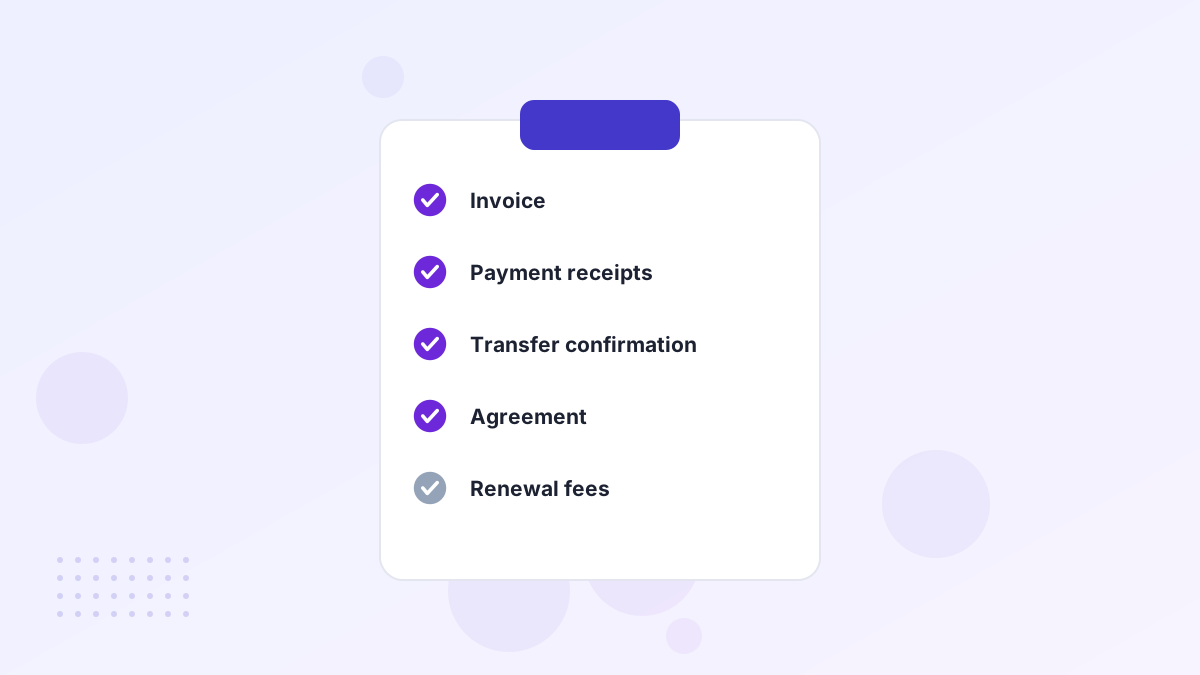
- The invoice or receipt showing the price and date.
- Payment records, including plan installments.
- Transfer confirmation showing when the domain came under your control.
- Any agreement describing what was bought.
- Yearly renewal invoices.
Questions to Ask Your Accountant
- Is this purchase capitalized or expensed?For your country and structure.
- Can it be amortized, and over how long?Based on how you'll use it.
- Do start-up cost rules apply?If you bought before trading.
- How should a payment plan be recorded?Including any fees.
- Is any sales tax or VAT due?On the purchase or fees.
Domain Tax FAQs
Can you deduct a premium domain in the year you buy it?
In the US, generally not in full. It's usually capitalized and may be amortized. Your accountant can confirm.
Are renewal fees deductible?
Usually, as ordinary business expenses.
Does reselling a domain create taxable income?
Usually, yes. A gain on sale is generally taxable. How it's taxed depends on your situation.